Top 10 Reamer Drill Bit Types for Global Buyers?

Global buyers rarely choose a Reamer Drill Bit by diameter alone. Ground conditions, hole tolerance, machine power, and replacement access matter just as much. A bit that performs well in limestone may struggle badly in fractured granite.

Demand is tied to real industrial activity. Global Construction Perspectives and Oxford Economics have projected strong long-term growth in worldwide construction output through 2030. The IEA’s Global Critical Minerals Outlook 2024 also highlights rising mineral demand for energy-transition technologies. More tunnels, foundations, mines, and exploration projects mean more drilling decisions.

The market is not simple.

Industry reports from Grand View Research and Mordor Intelligence commonly identify mining, construction, and oil and gas as major drilling-tool demand sectors. However, their market categories often combine reamers with other drilling products. That limitation deserves attention when comparing statistics.

This guide examines ten Reamer Drill Bit types used by international buyers. It considers pilot-hole accuracy, cutting structure, body material, cooling methods, and service life. It also discusses carbide, diamond, PDC, roller-cone, expandable, and specialized reaming designs.

A practical example helps. A contractor drilling a 150-millimeter hole through broken granite may need a different design than a utility crew enlarging a clean clay bore. The wrong choice can create vibration, oversize holes, premature tooth wear, and costly downtime.

Supplier claims require verification. Buyers should request test data, compatible formation ranges, torque requirements, and field references. No catalog replaces a controlled site trial. That is an imperfect truth, but an important one. Decisions should balance report-based market knowledge with observed drilling performance.
Top 10 Reamer Drill Bit Types for Global Buyers?

Reamer Fundamentals: IT7–IT9 Tolerance and 0.8–3.2 μm Ra Finish

For global buyers, reamer selection starts with the required hole tolerance, not the tool name. IT7 suits precision fits, while IT8 and IT9 allow progressively more variation. A reamer removes a small, controlled amount of material. It does not correct a badly positioned or oversized hole.

Common choices include hand, machine, chucking, shell, adjustable, expansion, taper-pin, carbide, indexable, and multi-flute reamers. Hand reamers suit manual alignment and repair work. Machine reamers provide better consistency in CNC or drilling machines. Adjustable designs help manage gradual wear, but setup errors can quickly reduce accuracy. Carbide tools often perform well in abrasive materials, although they need rigid clamping.

Surface finish usually falls between 0.8 and 3.2 μm Ra when cutting conditions are stable. Sharp edges matter. So does coolant delivery. Leave a small, even machining allowance after drilling, typically according to the material and tool diameter. Excess stock can cause chatter, heat, and poor finish. Insufficient stock may produce rubbing instead of cutting.

Measure the hole with calibrated bore gauges, air gauges, or suitable plug gauges. Check several positions and depths. A single reading can mislead. Tool runout, spindle alignment, material hardness, and chip evacuation all affect IT7–IT9 results. In practice, even a carefully selected reamer may miss the target when the pilot hole is inconsistent. That part deserves honest review. For export purchasing, confirm diameter, tolerance class, flute geometry, shank standard, coating requirements, and inspection records before approval.
Top 10 Reamer Drill Bit Types for Global Buyers

Reamer fundamentals: IT7–IT9 tolerance and 0.8–3.2 μm Ra finish

How to read this chart: The bars show representative target surface roughness values for commonly specified reamer types. Lower Ra values indicate a smoother finished bore.

Reaming commonly supports IT7–IT9 bore tolerances and approximately 0.8–3.2 μm Ra, depending on material, allowance, cutting conditions, tool geometry, machine rigidity, and coolant. Actual results should be verified with production trials and inspection data.

10 Reamer Drill Bit Types Classified by Design, Use, and Hole Geometry

Top 10 Reamer Drill Bit Types for Global Buyers

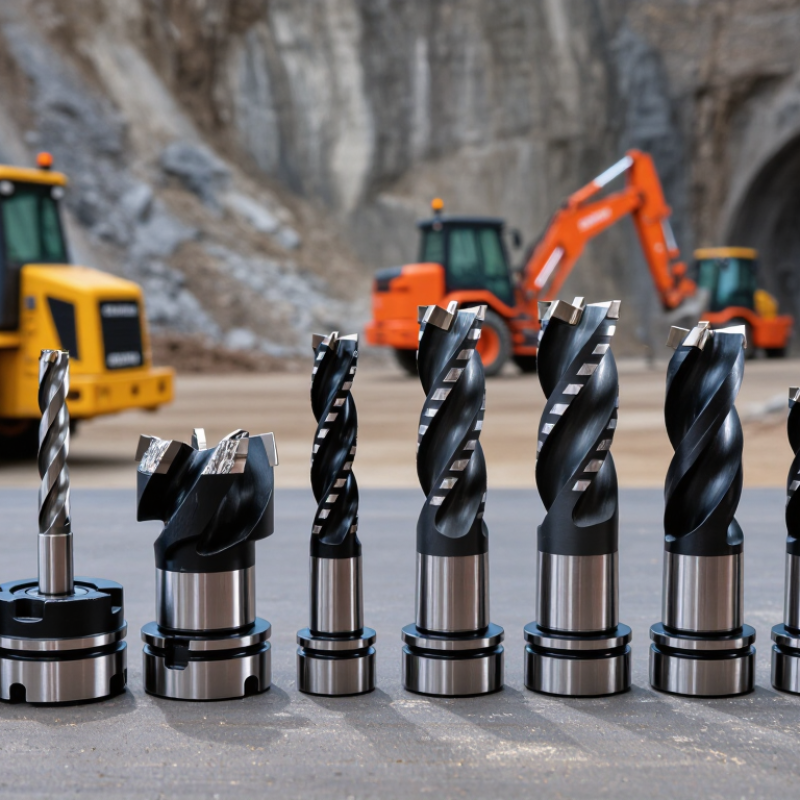
Reamer drill bits are best compared by design, application, and finished hole geometry. Field experience shows that one label rarely explains performance. Fixed-blade reamers suit stable formations and maintain a consistent gauge. Adjustable reamers fit changing diameters, but their settings require careful verification. Expandable reamers enlarge existing holes when access is limited. Pilot reamers follow a smaller opening and reduce wandering during enlargement.

Hole openers handle large diameter increases in construction and foundation work. Underreamers cut below a casing or restricted entry point, creating a wider lower section. Roller reamers use rolling cutters for abrasive ground and can reduce sliding friction. They still need correct weight and rotation. Poor settings can damage the hole.

Diamond reamers provide accurate finishing in hard, abrasive materials. Eccentric reamers create offset or nonconcentric profiles for specialized clearance needs. String reamers stabilize the drilling assembly and help smooth irregular walls. These ten types overlap in real projects, which can confuse purchasing decisions. Measure the pilot diameter, target gauge, formation hardness, expected deviation, and flushing capacity. Check cutter material, connection size, tolerance, and replacement access. A cheaper bit may become expensive after one stalled run. Even experienced buyers should review actual cutting evidence, torque changes, and recovered debris before approving repeat orders.

HSS, Carbide, and Coated Reamers: Comparing 3 Major Material Choices

For global buyers, reamer material often matters more than the advertised shape. HSS reamers remain practical for general steel, low-volume work, and machines with limited rigidity. They absorb vibration better and cost less to replace. The 2024 Grand View Research cutting-tools analysis places the global market above USD 20 billion, reflecting strong demand for economical machining solutions. HSS is not outdated.

Carbide reamers suit hardened steels, cast irons, and high-volume production. They can run faster and hold size under heat, but they need stable fixturing. A small spindle error may chip the cutting edge. The U.S. Geological Survey reported approximately 81,000 metric tons of global tungsten mine production in 2023. Supply remains strategically important, so buyers should check carbide availability and recycling policies. Price alone is a weak comparison.

Coated reamers add a thin surface layer, commonly based on titanium compounds or aluminum-rich coatings. They reduce friction and improve wear resistance during long cycles. A 2024 MarketsandMarkets cutting-tool report identifies coating technology as a key route toward longer tool life. Still, coating does not repair poor alignment. I would test one uncoated HSS tool, one carbide tool, and one coated option on the actual workpiece. That comparison can expose an uncomfortable truth: the most expensive reamer may deliver the least value. Select by material, tolerance, coolant, machine rigidity, and batch size. Small details decide.

Machine, Hand, Shell, Adjustable, and Taper Reamers Under ISO 235

For global buyers, reamer selection begins with the workpiece, not the catalog. Machine reamers suit rigid CNC or drill-press setups. Hand reamers remain useful for controlled fitting and repair work. Shell reamers support larger diameters and replaceable tooling economies. Adjustable reamers offer flexibility, but their accuracy depends heavily on careful setting. Taper reamers are essential for tapered holes and alignment applications. Each type needs a different inspection routine under ISO 235 requirements.

The 2024 Mordor Intelligence cutting-tools report estimates the global market at more than USD 23 billion, with continued growth driven by precision manufacturing. That expansion increases demand for repeatable hole finishing. Meanwhile, the International Federation of Robotics reported 541,302 new industrial robot installations in 2023. Automated cells favor machine reamers because consistent feed, coolant, and alignment reduce variation. Still, automation cannot correct a poorly prepared pilot hole.

In practical use, I check allowance, material hardness, chuck runout, and the final gauge before choosing a reamer. A shell reamer may reduce setup time on large holes, while an adjustable type can rescue low-volume work. Hand reamers feel simple. They are not always forgiving. Excessive pressure can bell-mouth the hole or damage the cutting edges. Buyers should verify diameter tolerance, flute geometry, shank form, and material compatibility against the applicable ISO documentation. Some specifications remain easy to misread, especially when suppliers use different measurement references. That deserves a second check.

Global Buyer Specifications: Diameter, Shank, Flutes, Coating, and Standards

Top 10 Reamer Drill Bit Types for Global Buyers

Global Buyer Specifications: Diameter, Shank, Flutes, Coating, and Standards

Choosing among ten reamer types starts with the finished hole, not the catalog photograph. Buyers should specify cutting diameter, tolerance, material, and required hole depth. For example, a reamer for a 10 mm H7 hole needs tighter diameter control than a general-purpose tool. Small details matter. Confirm whether the stated diameter is nominal or actual cutting size.

Shank selection affects machine compatibility and runout. Straight shanks suit collets, drill chucks, and some tapping holders. Morse taper shanks fit compatible machine spindles and support heavier cutting. Include shank diameter, taper number, and overall length in the purchase document. Flute choice also matters. Straight flutes work well in stable applications and interrupted cuts. Spiral flutes often improve chip evacuation in deep or continuous holes, but they may pull the tool into the workpiece.

Coating selection should match the work material and cutting speed. Uncoated carbide or high-speed steel may suit softer metals and controlled production. Hard coatings can improve wear resistance in abrasive alloys, but coating thickness may affect final size. Check flute count, helix angle, coolant access, and edge preparation. Standards such as ISO or applicable DIN specifications can clarify dimensions and tolerances, but buyers must verify the current edition and regional requirements. I have seen orders fail because the buyer copied a standard without confirming the machine interface. That mistake is avoidable. Request inspection records, material certificates, and sample measurements before approving large quantities.

Top 10 Reamer Drill Bit Types for Global Buyers — Global Buyer Specifications: Diameter, Shank, Flutes, Coating, and Standards

No. Reamer Type Typical Diameter Range Shank / Drive Flutes and Geometry Common Cutting Material Typical Coating Typical Use and Reference Standards
1 Hand Reamer 1–50 mm
0.039–1.969 in
Straight shank with square tang; manual tap-wrench drive 6–12 straight flutes; long lead-in chamfer High-speed steel Bright finish or steam oxide; TiN for selected production work Manual enlargement and finishing of pre-drilled holes; commonly associated with ISO 236-1 and DIN 206 dimensional practice
2 Machine Chucking Reamer 1–25 mm
0.039–0.984 in
Straight shank; round shank for drill chuck, collet, or toolholder 4–8 straight or right-hand helical flutes; short lead High-speed steel or cobalt high-speed steel Uncoated, TiN, TiAlN, or AlCrN CNC and conventional machine tools for accurate through-holes; dimensions commonly specified under DIN 212 or equivalent national standards
3 Morse Taper Machine Reamer 3–50 mm
0.118–1.969 in
Morse taper shank, typically MT1–MT5; tang or driving tenon 6–12 straight or helical flutes High-speed steel or cobalt high-speed steel Bright, steam oxide, TiN, or TiAlN Heavy-duty machine reaming; Morse taper interfaces are commonly referenced to ISO 296, with reamer dimensions based on applicable national or manufacturer standards
4 Adjustable Reamer 6–50 mm
0.236–1.969 in
Straight shank with adjustable blade assembly and square or round drive 6–8 adjustable blades; slight taper for controlled expansion Hardened tool steel or high-speed steel blades Normally uncoated; optional TiN on replaceable blades Repair work and low-volume production where one tool covers a size range; hole limits should be checked against ISO 286-2 fit requirements
5 Expansion Reamer 6–80 mm
0.236–3.150 in
Straight or Morse taper shank; expanding plug or tapered adjusting screw 6–12 straight flutes; expansion usually limited to a small adjustment range High-speed steel Bright finish or steam oxide Correcting worn or slightly undersized holes in maintenance applications; use tolerances specified on the engineering drawing
6 Shell Reamer 20–100 mm
0.787–3.937 in
Removable shell with keyed or relieved bore for a separate arbor 6–12 flutes; straight or helical cutting edges High-speed steel or carbide-tipped construction Uncoated, TiN, TiAlN, or AlCrN depending on work material Large-diameter holes and economical production tooling; arbor fit and runout should comply with the selected toolholder system
7 Taper Pin Reamer 1–25 mm small-end diameter
0.039–0.984 in
Straight shank with square tang; occasional machine shank versions 6–10 straight flutes; uniform taper commonly 1:50 High-speed steel Bright finish or steam oxide Finishing tapered pin holes; 1:50 taper is widely used for metric taper-pin applications, subject to the selected pin standard
8 Bridge Reamer 10–100 mm
0.394–3.937 in
Straight shank or Morse taper; extended body for alignment work 4–8 coarse straight flutes; long tapered pilot nose High-speed steel or carbide-tipped construction Uncoated, TiN, or wear-resistant PVD coating Aligning and enlarging mismatched holes in structural assemblies; dimensional requirements are normally defined by the project drawing
9 Solid Carbide Reamer 1–20 mm
0.039–0.787 in
Precision straight shank; cylindrical shank for collet or hydraulic holder 4–8 flutes; straight or helical, often with coolant-through capability Micrograin solid carbide Uncoated, TiAlN, AlTiN, or diamond coating for abrasive non-ferrous materials High-speed CNC finishing of cast iron, hardened steel, aluminum, and composites; hole tolerance and tool runout should be specified using ISO 286-2 principles
10 Carbide-Tipped Reamer 10–80 mm
0.394–3.150 in
Straight or Morse taper shank; brazed or mechanically retained carbide tips 4–10 flutes; straight or helical cutting edges Carbide tips on alloy-steel or tool-steel body Usually uncoated carbide; optional TiAlN or AlCrN on compatible tip grades High-volume machining and abrasive cast materials; holder taper dimensions may reference ISO 296 or the applicable machine-tool interface standard

Note: The ranges shown are typical international procurement specifications rather than universal limits. Final diameter tolerance, cutting angle, coolant design, coating grade, and shank dimensions should be confirmed against the part drawing and the applicable product standard.