
Choosing slab formwork is not simply a matter of comparing prices. A system must match the slab design, site conditions, labor skills, and project schedule. A low purchase price can lose its appeal when panels need repeated adjustment or arrive late. Small details matter: panel weight, prop spacing, connection design, and how easily crews can move equipment across a busy floor.
Construction engineering author Robert L. Peurifoy emphasized planning in his widely used construction texts. The following is an editorial paraphrase, not a verbatim quotation: “Good equipment choices begin with the work sequence, not the catalog.” That principle helps frame this guide to the top 10 slab formwork manufacturers for global buyers. It also reminds buyers to check technical documentation, load data, component compatibility, and local service support before making a decision.
A manufacturer’s reputation matters. So does the system’s performance on the actual site. Buyers should compare safety features, reuse potential, delivery capacity, and after-sales assistance, rather than relying on a headline price or a polished brochure. Ask for project references. Review the drawings.
This list offers a practical starting point, not a universal verdict. A system that works well on a regular floor plate may be awkward on a tight site with irregular edges. Even experienced teams can miss a constraint during early planning. That is worth admitting. The strongest slab formwork choice is the one that fits the project’s real conditions and can be supported throughout the build.
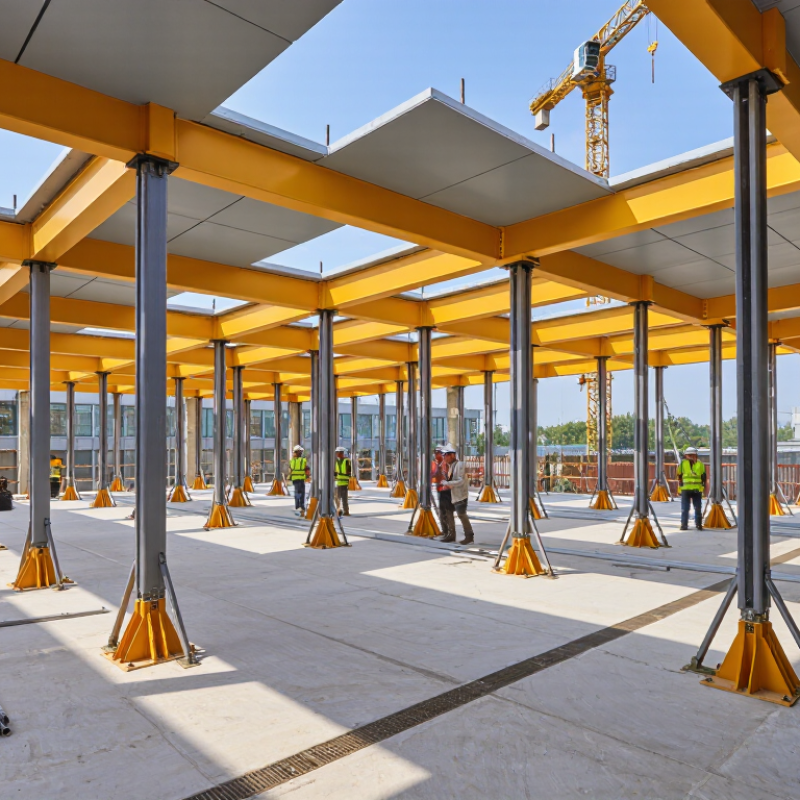
Slab formwork is the temporary mold and support system that shapes a concrete floor until the slab can carry its own weight. It usually combines deck panels, beams, props, and bracing. On site, crews check the prop spacing, panel joints, and bearing points before the pour. A small gap can leak cement paste. A loose prop can shift under wet-concrete loads. The system is temporary, but its design and setup need careful review.
The scale is substantial. The Global Cement and Concrete Association estimates that around 14 billion cubic metres of concrete are used worldwide each year. The US Geological Survey’s Mineral Commodity Summaries 2025 estimates global cement production at 4.2 billion metric tons in 2024. These figures describe the scale of concrete construction, not formwork demand directly. They do show why repeatable, well-planned slab systems matter. Yet drawings do not always capture site conditions; that gap deserves attention.
Tips: Before pouring, check props against the approved layout, tighten connections, and inspect the deck for openings. Keep the pour sequence clear. A quick visual check helps, but it cannot replace competent inspection or project-specific engineering.
This table compares ten commonly used slab-formwork system types, not named manufacturers or a verified supplier ranking. Suitability depends on the project design, loading, layout, local regulations, and the manufacturer’s instructions.
| No. | Slab Formwork System | Typical Components | How It Supports Concrete Construction | Common Application | Buyer Consideration |
|---|---|---|---|---|---|
| 1 | Traditional timber formwork | Timber joists, plywood sheathing, props, and bracing | The sheathing forms the slab soffit; joists transfer wet-concrete and construction loads to props and the supporting structure. | Small projects, irregular layouts, and sites where materials can be cut to size | Check material quality, cutting waste, surface finish, and the permitted reuse condition. |
| 2 | Beam-and-plywood formwork | Primary and secondary beams, plywood panels, props, and connectors | Plywood contains the concrete; secondary and primary beams distribute loads to the prop or shoring layout. | Cast-in-place slabs with varied dimensions or changing floor layouts | Confirm allowable spans and loads from the system’s design data, and plan safe assembly and stripping. |
| 3 | H20 timber-beam system | Engineered timber beams, secondary beams, form face, props, and accessories | The beam grid supports the form face and channels loads through the shoring to the base or supporting floor. | Repetitive floor cycles and projects needing adaptable beam spacing | Compare beam condition, compatible connectors, handling requirements, and engineered layout guidance. |
| 4 | Modular panel formwork | Standardized deck panels, panel supports, props or frames, and edge components | Interconnected panels create a continuous deck surface supported by a designed grid of shoring elements. | Regular floor plans with repeated dimensions and floor-to-floor cycles | Check panel sizes, infill requirements, component compatibility, and the supplier’s load tables. |
| 5 | Table or flying formwork | Large deck units, integrated supports, adjustment devices, and lifting points | A preassembled deck unit supports the slab and can be moved as a unit between bays or floors using suitable handling equipment. | Large, repetitive floor plates with suitable access and lifting arrangements | Assess crane or lifting access, transport dimensions, edge conditions, and the planned relocation sequence. |
| 6 | Drop-head panel system | Panels, drop-heads, beams or supports, and props | The drop-head mechanism can allow panels to be lowered for striking while designated props or back-propping remain in place as required by the engineered procedure. | Repeated slab cycles where an approved early-striking sequence is planned | Follow the project-specific striking, reshoring, and concrete-strength requirements; do not infer safe timing from the mechanism alone. |
| 7 | Aluminium panel formwork | Aluminium-framed panels, deck infills, props, and connectors | Panels form and support the slab soffit; compatible props transfer loads to the floor below or designed support surface. | Projects with repeatable layouts and a planned panel-reuse cycle | Review panel layout flexibility, repair procedures, handling limits, and availability of replacement parts. |
| 8 | Steel panel formwork | Steel-faced or steel-framed panels, support members, props, and connectors | Panels provide a form face and transfer slab loads through their supports into the shoring system. | Projects requiring durable panels and repeated use under suitable maintenance conditions | Consider panel weight, lifting and handling needs, corrosion protection, and maintenance requirements. |
| 9 | Plastic modular formwork | Reusable plastic modules, connecting pieces, edge forms, and supporting props or frames | Connected modules form the slab soffit; a designed support arrangement carries the concrete and construction loads. | Projects using standardized module dimensions and compatible layouts | Verify system-specific load limits, module compatibility, cleaning instructions, and replacement availability. |
| 10 | Profiled steel decking as permanent formwork | Profiled steel sheets, edge closures, temporary supports where required, and concrete reinforcement as designed | The deck can act as permanent formwork during concrete placement; any composite structural action must be established by the project design. | Building floors designed for profiled steel decking and coordinated service openings | Confirm span tables, temporary propping needs, fire and corrosion requirements, and structural design approval. |
Safety note: Slab formwork and shoring must be selected, installed, inspected, and removed in accordance with the project design, applicable regulations, and the system supplier’s instructions.