China Top Physiotherapy Electric Machine Suppliers?

Choosing a China-based supplier for a Physiotherapy Electric Machine takes more than comparing prices. Buyers need to understand the equipment, its intended use, and the support available after delivery. A compact therapy unit may look similar across several product listings, yet differ in controls, accessories, documentation, and service arrangements. Small details matter.

This guide explores how to assess suppliers with practical questions in mind. Can the supplier explain the machine’s functions clearly? Are specifications, user instructions, and warranty terms available for review? How are parts sourced, and what happens if a control panel or cable needs attention? Clear answers are useful. Vague promises are not.

Supplier checks should also consider manufacturing experience, product testing information, communication quality, and the buyer’s own requirements. A polished website alone cannot establish product quality. Nor does a low quotation tell the whole story. Requesting current documents and confirming details directly can reduce avoidable surprises, although no checklist removes every risk. That is worth admitting.

The aim is not to label one supplier as best for every buyer. Clinics, distributors, and equipment purchasers may have different budgets, service expectations, and technical needs. The following overview offers a measured starting point for comparing Chinese suppliers and asking better questions before making a purchasing decision.
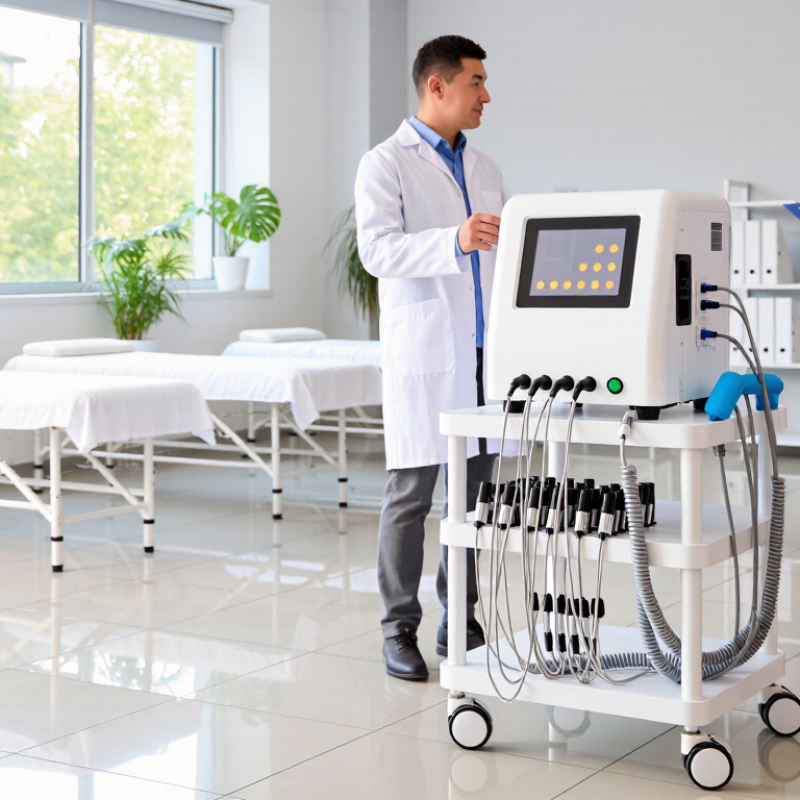
China Top Physiotherapy Electric Machine Suppliers?

What Physiotherapy Electric Machines Include and How They Work

Physiotherapy electric machines use controlled energy to support rehabilitation. Common types include TENS units, neuromuscular electrical stimulation devices, interferential therapy machines, and therapeutic ultrasound equipment. Each works differently. TENS sends mild pulses through skin electrodes to influence pain signals. Neuromuscular stimulation targets motor nerves, creating visible muscle contractions that may help maintain activity when movement is limited.

Interferential devices deliver overlapping currents through several electrodes. Therapists may use them for pain relief, though individual responses vary. Therapeutic ultrasound uses sound waves rather than electrical current inside the body; electricity powers the device, while a moving treatment head delivers energy to tissue. A clinician typically applies gel and moves the head slowly over the selected area. It should not feel sharply hot or painful.

The right setting depends on the person, treatment goal, and clinical assessment. Skin sensation, electrode placement, pulse duration, and intensity all matter. A mild tingling sensation is common with surface stimulation. More is not always better. I have found that patients sometimes expect a stronger sensation to mean a better result, but comfort and response are more useful guides. Machines can support care, yet they do not replace movement practice, monitoring, or a therapist’s judgment. Use should be adjusted when sensation changes or discomfort appears.

China Top Physiotherapy Electric Machine Suppliers? — What Physiotherapy Electric Machines Include and How They Work

Representative frequency settings for common electrical stimulation modalities. TENS and NMES values refer to pulse frequency; IFC and Russian stimulation values refer to carrier frequency. Actual settings vary by device and treatment protocol, so these figures are not direct measures of treatment intensity or effectiveness.

How they work: These devices deliver controlled electrical currents through electrodes on the skin to stimulate sensory nerves or muscles. TENS is commonly used for sensory-level stimulation, while NMES targets muscle contraction. IFC and Russian stimulation use higher-frequency carrier currents that are modulated or delivered in bursts.

Key Product Categories Offered by Chinese Suppliers

China Top Physiotherapy Electric Machine Suppliers?

Key Product Categories Offered by Chinese Suppliers

Chinese suppliers commonly group physiotherapy equipment by treatment technology and intended clinical workflow. Electrotherapy machines deliver selectable currents, such as TENS or EMS, through electrode pads. Buyers should compare waveform options, channel count, intensity controls, and whether replacement electrodes are readily available. The display should be clear enough to read during routine setup.

Therapeutic ultrasound systems form another major category. Check the available frequencies, applicator design, and how the unit signals contact or treatment time. Shockwave systems may also appear in supplier catalogs, but product names and technical specifications can vary. Labels vary. Ask for detailed specifications rather than relying on category names alone. Combination devices can save room in a small treatment area, though their interfaces may take longer to learn. That trade-off deserves attention.

Some suppliers also offer traction equipment and related accessories alongside electrical treatment units. For a careful comparison, request manuals, maintenance guidance, staff-training details, and written warranty terms. Confirm that quoted accessories match the exact model. A polished catalog is useful, but it does not replace a hands-on review of controls and build quality. Even experienced buyers can miss practical differences when comparing only headline specifications.

China Top Physiotherapy Electric Machine Suppliers? - Key Product Categories Offered by Chinese Suppliers

Product Category Common Technology Typical Use Setting Common Configurations Key Details to Verify
Electrotherapy Devices Transcutaneous electrical nerve stimulation (TENS), neuromuscular electrical stimulation (NMES), and other low- or medium-frequency currents Physiotherapy clinics, rehabilitation departments, and home-use settings, depending on the device Portable or tabletop units; one or more channels; reusable electrode leads and pads Available waveforms, output specifications, channel count, electrode compatibility, safety features, and intended-use documentation
Therapeutic Ultrasound Units High-frequency acoustic energy delivered through a treatment applicator Supervised physiotherapy and rehabilitation settings Single- or dual-frequency models; handheld applicator; continuous and pulsed operating modes on many models Operating frequency, output range, applicator size, treatment modes, calibration information, and applicable electrical-safety documentation
Extracorporeal Shock Wave Therapy (ESWT) Systems Radial pressure-wave or focused shock-wave technology Clinics with trained operators and protocols appropriate to the device Console with handpiece and interchangeable applicators; pneumatic or other device-specific energy-generation systems Whether the system is radial or focused, energy or pressure settings, pulse-rate range, handpiece service requirements, and regulatory status for the destination market
Low-Level Laser and Photobiomodulation Devices Low-power red or near-infrared light sources, including laser diodes or LEDs Clinical or rehabilitation settings, subject to the device’s intended use and local regulations Handheld probes, multi-diode applicators, or panel-style units Wavelength, optical output, treatment area, laser class where applicable, protective measures, and labeling for the target market
Interferential and Combination Therapy Units Interferential current or a combination of modalities, commonly electrotherapy and therapeutic ultrasound Rehabilitation clinics and hospital physiotherapy departments One console with separate or combined treatment functions; multiple channels on some models Which modalities can operate together, independent control options, included accessories, user interface language, and service support
Traction Therapy Equipment Motorized force application with programmable or manually adjustable treatment parameters Clinics and rehabilitation departments using clinician-supervised traction protocols Cervical or lumbar configurations; treatment table, control unit, and restraint accessories Force range, adjustment increments, emergency stop, patient restraints, table dimensions, and installation requirements
Continuous Passive Motion (CPM) Devices Motorized, repeated joint movement within adjustable ranges Rehabilitation settings, commonly for supervised post-operative or mobility protocols Joint-specific devices, such as knee or shoulder units; adjustable range and speed controls Supported joint and patient-size range, movement range, speed settings, fitting accessories, and cleaning instructions
Shortwave Diathermy Equipment Radiofrequency energy, commonly at 27.12 MHz, for therapeutic heating applications Professional clinical environments with appropriate operator training and safety controls Capacitive or inductive applicators, depending on the model Applicable standards, output controls, electromagnetic-interference guidance, contraindication information, and room-safety requirements
Professional Heat and Cold Therapy Systems Controlled heating or circulating temperature-managed fluid for hot or cold applications Clinics, rehabilitation facilities, and other supervised care environments Heating units, cold-compression systems, wraps, or interchangeable treatment pads Temperature-control range, pressure options, treatment-pad sizes, cleaning procedures, and electrical protection

Product availability and specifications vary by manufacturer and model. Confirm intended use, applicable certifications, labeling, electrical safety, warranty terms, spare-parts availability, and service arrangements for the destination market before purchasing.

How to Assess Supplier Quality, Certification, and Manufacturing Capacity

China Top Physiotherapy Electric Machine Suppliers?
How to Assess Supplier Quality, Certification, and Manufacturing Capacity

Choosing a physiotherapy electrotherapy supplier takes more than comparing prices and product photos. The World Health Organization’s 2023 Rehabilitation fact sheet estimates that 2.4 billion people worldwide could benefit from rehabilitation. That growing need makes dependable equipment and after-sales support essential. A polished brochure is not proof of consistent production.

Request the supplier’s ISO 13485 certificate, then confirm its validity, factory location, and certified scope. For electrical equipment, review applicable IEC 60601 test reports and check that the tested model matches the product being offered. Ask for calibration records, incoming-material checks, batch traceability, and examples of corrective-action reports. Paperwork is not proof. A third-party factory audit can reveal whether written procedures match the actual assembly line.

Manufacturing capacity should be demonstrated with recent production records, equipment lists, staffing, and realistic lead times—not just a large factory photograph. Ask how the supplier handles peak orders, component shortages, warranty repairs, and spare-part availability. Request a sample unit and inspect its labeling, controls, cables, and user instructions. I would still treat a sample cautiously: one well-finished unit cannot establish long-term consistency. Compare defect and return data across several production batches, where available, and document any gaps before placing a larger order.

Leading Chinese Supplier Profiles and Their Specialties

Chinese physiotherapy equipment suppliers often specialize in distinct parts of the treatment room. Some focus on electrotherapy units, offering compact devices for transcutaneous stimulation, interferential currents, or ultrasound applications. Their strengths may include adjustable intensity, clear control panels, and accessories such as reusable electrodes. A buyer should check output specifications, operating instructions, and whether replacement leads are readily available. Small details matter.

Other suppliers build broader rehabilitation portfolios. Their catalogs may combine treatment tables, traction equipment, hot-pack cabinets, and mobility aids. This can simplify sourcing for clinics fitting out several rooms, though a wide catalog does not guarantee equal depth in every category. Ask for product-level documentation, sample test records, and realistic production timelines. A video call can show how cables connect and how settings change, but it cannot replace hands-on evaluation.

Some manufacturers emphasize private-label production or customized housings, while others concentrate on export packaging and routine quality checks. Compare these capabilities carefully. Claims about durability are easier to assess when a supplier shares material details, inspection steps, and warranty terms. One practical test is to request photos of connectors, labels, and packaging before an order. Supplier profiles are useful starting points, not proof of performance; even a polished brochure can leave important questions unanswered.

How to Compare Pricing, Service, and Export Support

China Top Physiotherapy Electric Machine Suppliers?

A quoted price means little without a clear equipment specification. Compare the same treatment functions, output settings, accessories, and included probes. Ask whether the price covers calibration, user training, and protective packaging. Small details matter. A low quote may exclude items needed for daily clinic use.

Service is easier to judge through specific commitments. Ask how quickly technical staff usually respond, which parts are stocked, and how replacement components are shipped. Request the warranty terms in writing, including coverage for labor and shipping. Ask for evidence. A live equipment demonstration can reveal whether controls are intuitive and instructions are clear. Still, one smooth demo does not guarantee reliable long-term support.

For export support, confirm the supplier can prepare accurate invoices, packing lists, manuals, and shipment details. Check that voltage, plug type, crate dimensions, and delivery terms match your destination and facility. Request estimated production and transit times, then ask how delays are communicated. Compare total landed cost, not just the machine price. One weakness in this process: freight estimates can change, so leave room in the budget and verify them before ordering.