Top 10 Grinding Steel Ball Manufacturers Worldwide
Grinding Steel Ball suppliers serve mines and mineral processors where mills run for long shifts under heavy impact. Ball diameter, hardness, chemistry, and heat treatment affect wear, throughput, and maintenance intervals. A small difference in surface quality can matter across thousands of impacts. This is practical equipment, not a decorative commodity.
The scale is substantial. Worldsteel’s World Steel in Figures 2025 reports global crude steel production of about 1.88 billion tonnes in 2024. The U.S. Geological Survey’s Mineral Commodity Summaries 2025 estimates worldwide mined copper production at roughly 23 million tonnes that year. These figures describe connected industrial activity, not grinding-ball sales; they should not be mistaken for direct market-size estimates. Still, they help explain why dependable grinding media remain important to mineral processing.
This guide examines ten manufacturers worldwide, with attention to product range, production capability, quality controls, and service reach. Buyers should compare technical data against their own ore, mill, and operating conditions. A high hardness figure alone tells only part of the story. Supplier claims also deserve verification through specifications, test records, and operating references. Rankings can simplify a complex market, perhaps too much. Actual performance varies by application, and published information is not equally detailed for every company. That limitation matters. The aim here is a useful starting point, not a substitute for plant trials or engineering review.
What Grinding Steel Balls Are and Where They Are Used
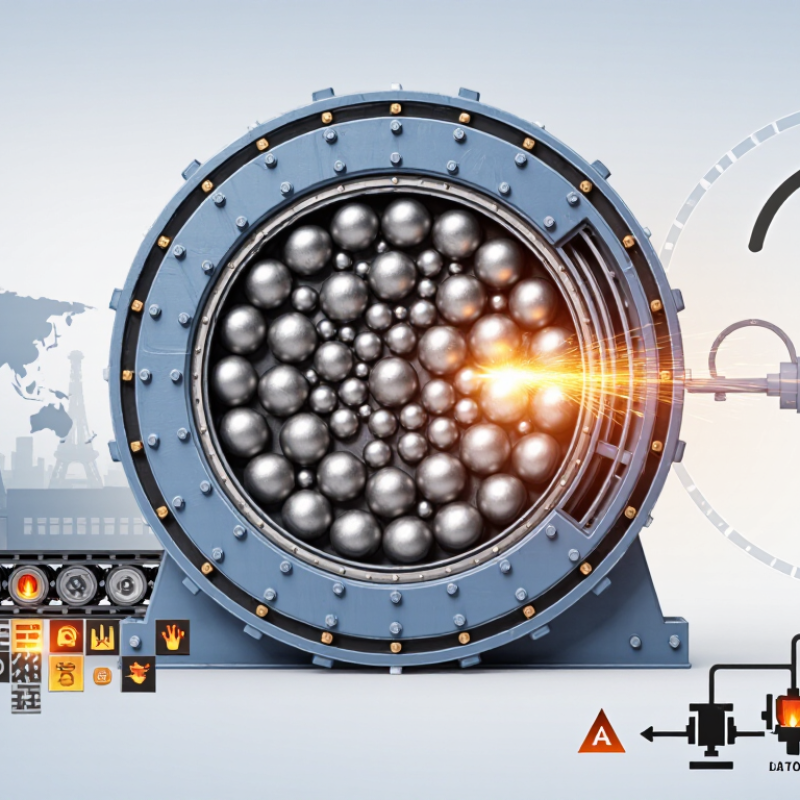
Grinding steel balls are hardened spherical media used inside rotating mills. As the mill turns, the balls lift, fall, and collide with ore or other feed material. Their repeated impact and rubbing action reduce larger pieces into smaller particles. The process looks simple. Its results depend on ball diameter, hardness, mill speed, and the material being ground.
These balls are common in mineral processing, cement production, and some power-generation operations. In an ore-processing plant, for example, a mill may contain thousands of balls moving through a slurry of water and crushed rock. Larger balls can break coarse feed; smaller ones help refine particles. That distinction is useful, but not absolute. The best mix depends on the mill and the feed.
Steel balls gradually wear, and their shape changes with use. Operators monitor ball consumption, mill noise, and product size to spot problems. A ball that is too soft may wear quickly; one that is too hard can still perform poorly if its size or chemistry is unsuitable. There is no perfect choice on paper alone. Plant conditions can be messy, and a small adjustment may take time to evaluate. Even routine checks matter.
How Grinding Steel Balls Are Manufactured and Tested
Grinding steel balls begin as selected steel, melted and alloyed to meet a target chemistry. Manufacturers cast or forge the material, then size each ball and apply controlled heat treatment. Quenching hardens the surface; tempering helps reduce brittleness. The balance matters. A ball that is too soft wears quickly, while excessive hardness can increase cracking risk. World Steel Association’s World Steel in Figures 2024 reports global crude steel production of 1,888.2 million tonnes in 2023, showing the scale of the supply chain behind steel products. That figure describes crude steel, not grinding-media output.
Testing checks whether production controls deliver consistent balls. Inspectors measure diameter, roundness, and visible surface flaws, then test hardness across sampled balls. ASTM E18 describes Rockwell hardness testing, while ASTM A370 covers mechanical testing of steel products; these methods support testing plans but do not prescribe every grinding-ball acceptance limit. Metallographic examination can reveal heat-treatment depth and internal structure. Some producers also use impact or drop testing, with limits set by product requirements. Samples should represent each production lot, not just convenient pieces. Even a precise reading can miss variation across a batch. That deserves attention. Results, calibration records, and failed-sample reviews help buyers assess consistency more reliably than a single headline hardness value.
Top 10 Grinding Steel Ball Manufacturers Worldwide
A useful “Top 10 Grinding Steel Ball Manufacturers Worldwide” comparison should look beyond production volume. Buyers need to examine chemistry control, hardness consistency, impact resistance, and wear rates in their own mills. World Steel Association data reports 1,882.6 million tonnes of crude steel production in 2024. That figure shows the scale of steelmaking, but it does not measure grinding-ball capacity or quality. The distinction matters.
Mining conditions make comparisons harder. The USGS Mineral Commodity Summaries 2024 estimates global copper mine production at about 22 million metric tonnes in 2023. Ore hardness, mill design, and operating conditions all affect ball consumption, so a supplier’s published wear figure may not transfer directly to another site. Ask for test methods, batch traceability, and results from comparable applications. Small details count.
A worldwide top-ten shortlist should therefore compare documented quality systems, export experience, technical support, and delivery reliability—not just advertised capacity. Request sample certificates and independent test data where possible. A ranking can still mislead. Public information rarely uses one shared testing standard, and that gap deserves scrutiny. The strongest choice is the manufacturer that can explain its data clearly and verify performance under relevant operating conditions.
Top 10 Grinding Steel Ball Manufacturers Worldwide
Typical Grinding Steel Ball Size Ranges by Mill Application
Grinding steel balls are commercially produced in a range of diameters. The ranges shown are general industry examples, not manufacturer-specific specifications or a company ranking; suitable sizes vary with mill design, ore characteristics, and operating conditions.
Industry Trends Shaping Global Grinding Ball Production
Grinding ball production is changing as mines seek higher throughput with tighter control over energy and wear. In many plants, operators track furnace temperature, quenching speed, and hardness across each batch. Small changes matter. A cooling delay can create uneven hardness, which may shorten service life in demanding mills. Producers are investing in automated handling and digital inspection, though older equipment can make consistent upgrades difficult.
Material choices are shifting too. Recycled steel can reduce demand for virgin inputs, but its composition must be controlled carefully. Too much variation may affect toughness and resistance to repeated impact. Testing remains essential: hardness readings alone do not show how a ball will perform after months of grinding. Traceability helps connect test results with production conditions and customer feedback. Costs remain stubborn. Freight distance, electricity prices, and local access to alloying materials shape where production is practical. These trends point toward more measured manufacturing, not a perfect solution; process data still needs skilled interpretation.
