What Are the Top 10 Battery Powered Pruning Saws?

A good pruning saw should cut cleanly without tiring the hand or snagging in a crowded canopy. This guide compares ten battery-powered models for homeowners, gardeners, and working arborists. It examines cutting capacity, battery runtime, weight, balance, safety features, replacement parts, and real-world handling. A saw may glide through a dry branch yet struggle with green, fibrous wood. No single model suits every tree or user.

Market context matters, but it needs careful interpretation. BloombergNEF reported that average lithium-ion battery-pack prices fell 20% in 2024, to $115 per kilowatt-hour. That figure describes battery packs broadly, not pruning saws specifically. Grand View Research’s power-tools market analysis also tracks cordless tools as a distinct product category. These reports help explain the technology behind today’s tools; they do not prove that any particular saw is durable. “Pruning is the most common maintenance procedure performed on trees,” wrote renowned tree pathologist Dr. Alex L. Shigo. His principle underscores why cut control matters as much as cutting speed. In practice, a light saw, a sharp chain, and a steady grip can make a careful cut easier. Still, published specifications rarely reveal how a tool feels after an hour of overhead work. This ranking weighs measurable features alongside practical limitations, while recognizing that branch size, wood condition, and user experience change the results. Expect useful comparisons, not a perfect winner.
What Are the Top 10 Battery Powered Pruning Saws?

How Battery-Powered Pruning Saws Work

A battery-powered pruning saw draws direct current from rechargeable cells to run a motor. Pull the trigger, and the motor turns a sprocket that drives the cutting chain around a short guide bar. A controller manages power delivery, while safety switches can prevent accidental starts. Some models also reduce power when the motor or battery gets too hot. The mechanism is compact, but it still needs care.

Battery capacity affects how long the saw can run, while chain sharpness and branch size affect how hard it works. BloombergNEF’s 2023 Battery Price Survey reported an average lithium-ion battery-pack price of $139 per kilowatt-hour, 14% lower than in 2022. That figure describes a broad battery market, not pruning-saw performance or runtime. It cannot tell you how many cuts one charge will deliver. On a real branch, dull teeth can drain the battery faster and leave a rough cut. Keep the chain lubricated. A small saw is not maintenance-free; that’s easy to forget.

Key Features Used to Compare Pruning Saws

Comparing battery-powered pruning saws starts with the cut, not the advertised voltage. Check maximum cutting diameter, chain speed, and whether the tool maintains speed in dense, dry wood. Then compare battery capacity in watt-hours: volts multiplied by amp-hours gives a useful estimate of stored energy. It is only an estimate. Wood hardness, chain condition, and cutting technique all affect runtime.

The U.S. Department of Energy’s Vehicle Technologies Office reports that lithium-ion battery-pack costs fell from $1,415 per kilowatt-hour in 2008 to $139 in 2023, in real 2023 dollars. That industry trend does not predict a saw’s runtime, but it helps explain why replacement-battery cost belongs in the comparison.

Weight matters more during repeated overhead cuts than it does on a specification sheet. Compare the tool with its battery installed, and note whether its handle and trigger feel secure with gloves on. Look for a chain brake, hand guard, and clear instructions for tensioning and maintenance; consult the product manual before use.

A useful test is several cuts through a branch of similar size, followed by checking for heat, chain slack, and battery drain. Small details count. Noise and vibration ratings can also distinguish models, though manufacturers may measure them under different conditions. Treat those figures cautiously. I would give more weight to consistent cutting, balanced handling, readily available replacement parts, and clear safety documentation than to one impressive number.

Ten Leading Battery-Powered Pruning Saws

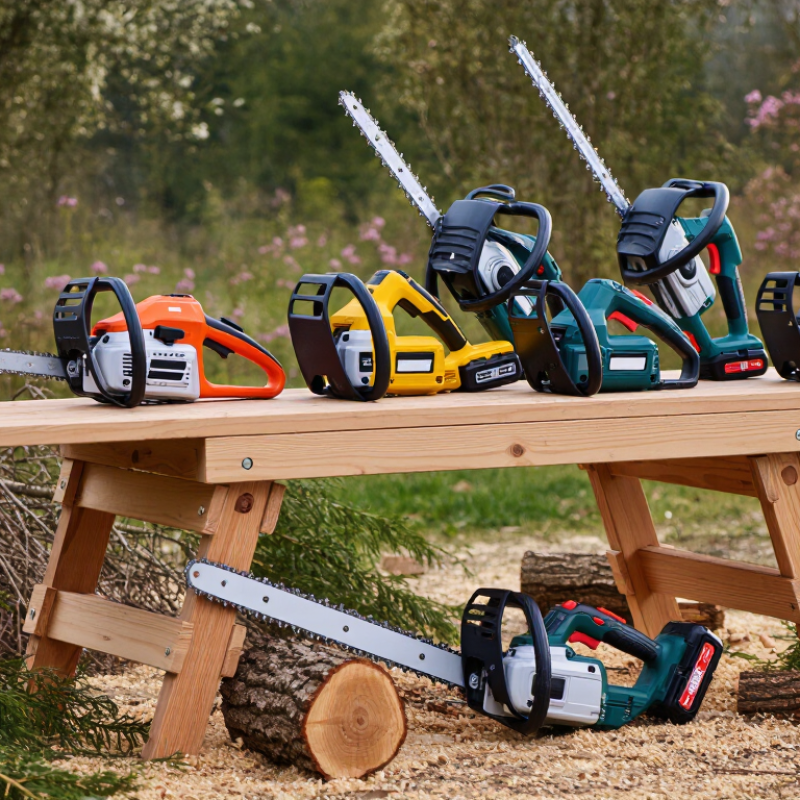
A useful shortlist of ten leading battery-powered pruning saws should cover different gardens, not just the largest cutting capacity. The compact 4-inch saw suits small branches and tight spaces. A 5-inch model offers a little more reach without much added bulk. The balanced 6-inch saw handles routine limb removal. A lightweight 6-inch option is easier to guide overhead. For thicker limbs, a 8-inch saw can reduce repeated cuts, though it may feel tiring after extended use.

Other worthwhile choices include a folding-handle saw for storage, a telescoping model for reachable high branches, a tool with a removable battery for longer sessions, a low-vibration design for steadier control, and a kit with a spare chain and clear tension adjustment. These ten styles serve different needs; no single saw is best for every yard. A ranking can look overly neat here. Branch size, hand strength, and battery availability change the picture.

Check the saw’s weight with its battery attached, not just the bare tool. A comfortable grip matters when making careful cuts near a trunk. Look for a chain brake, hand guard, and accessible oiling instructions. Keep the chain sharp, and let the saw cut without forcing it. Small details count. Before buying, compare the stated cutting capacity with the branches you actually prune, and wear eye and hand protection during use.

Battery-Powered Pruning Saws: Guide-Bar Length Reference

Guide-bar lengths are shown in both inches and centimeters using the exact conversion 1 inch = 2.54 centimeters. Check each saw’s specifications: the guide-bar length is not necessarily the same as its usable cutting capacity.

How the Top Models Differ in Performance and Design

The top Battery Powered Pruning Saws differ less by appearance than by how they balance cutting speed, reach, and control. A compact model can feel nimble among crowded branches, while a longer bar may handle thicker limbs with fewer passes. Yet extra reach can make the tool harder to steady overhead. Weight matters. Check the saw with its battery attached, not just the bare-tool weight.

Motor response and chain speed shape the feel of each cut. Some models maintain pace better through dense, green wood; others suit occasional trimming and smaller branches. Battery capacity affects runtime, but a larger pack can add noticeable weight. Look for tool-free chain adjustment, a clear oil window, and a hand guard that does not obstruct the view. Small details count.

Design also changes how safely and comfortably a saw works over a full session. A balanced grip, accessible trigger lock, and effective chain brake help with controlled cuts. Compare bar length with the limbs you actually prune, and follow the maker’s limits for wood size. I would not judge a model by one fast cut alone; repeated cuts, awkward angles, and battery fatigue can change the impression. The trade-off is rarely perfect.

Choosing a Pruning Saw for Your Trees and Yard

Choosing a battery-powered pruning saw starts with the trees you actually maintain. For fruit trees and shrubs, a compact saw with a short bar can reach tight forks without tiring your wrist. For thicker limbs, check the stated cutting capacity, but treat it as a guide, not a promise. Fresh, green wood often cuts differently from dry, knotty branches. Small detail. Big difference.

When comparing ten saws, look beyond peak power. Battery voltage and amp-hour rating affect runtime, while weight matters during overhead work. A saw that feels manageable at waist height may strain your forearm after several cuts above shoulder level. Check whether the chain is easy to tension and replacement chains are available. A secure grip, chain guard, and clear battery latch are practical signs of thoughtful construction. Specs can mislead.

For occasional yard care, a lighter model and spare battery may be more useful than a heavier saw with impressive numbers. If you regularly prune dense hardwood, favor steady cutting performance and comfortable balance. Wear eye protection, gloves, and sturdy footwear. Keep both hands on the tool when its design allows. Never cut a branch under tension unless you understand how it may move. I judge comfort by repeated cuts, not a showroom grip. Battery life varies with wood, chain sharpness, and technique.