7 Tips for Choosing Grey Retail Shelving for Your Store
Grey Retail Shelving can make a store feel calm, modern, and easy to navigate. But the right choice depends on more than color. Shelf depth, load capacity, finish, and adjustability all affect daily use. A pale grey unit may brighten a narrow aisle, while a darker finish can frame packaged goods without competing with their labels. Small details matter. Check how the shelves look under your store lighting, not only in a supplier’s photograph.
For a practical planning voice, this introduction uses a fictional retail-fixture specialist, Maya Chen. Her illustrative guiding line is: “Choose shelving for the work it must do, not just the color it wears.” This is original editorial wording, not a verified quotation from a real expert. The principle still points to useful questions: Will staff restock quickly? Can shelf heights change as products shift? Will carts pass without clipping the uprights?
This guide outlines seven tips for choosing Grey Retail Shelving, from measuring floor space to comparing finishes and installation needs. It considers how fixtures support product visibility, customer movement, and routine cleaning. A finish can show fingerprints more than expected. That is easy to overlook. No single setup suits every store, so test measurements against real products and aisle conditions before ordering. The best-looking option is not always the most practical. And sometimes a sample panel tells you more than another product photo.
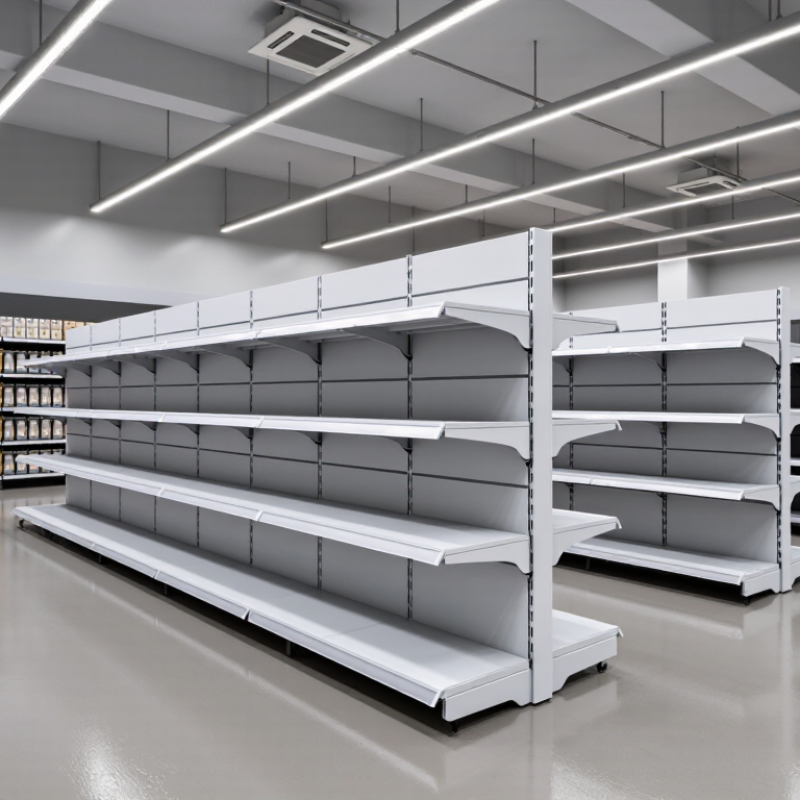
Assess Store Layout, Available Space, and Customer Flow
Grey shelving can make a store feel calm, but it may also blend into pale floors or dim corners. Check the space at opening and during busy hours. Mark the shelving footprint with tape, then walk the route from entrance to checkout. Can two shoppers pass while one pauses to browse? Leave clear sightlines to signs, service counters, and exits. Watch the turns. Aisles that look generous on a floor plan can feel tight beside baskets, displays, or a queue.
Place high-demand items where shoppers can reach them without crossing the main traffic path. Keep lower shelves for heavier goods, and avoid tall units near entrances or corners where they block views. Grey shelves can help separate departments, but use contrasting labels and lighting so products remain easy to spot. The 2023 Global Shopper Study reported that 78% of shoppers are more likely to shop in stores offering fast, easy checkout. That makes the path to checkout part of the layout, not an afterthought. Test it with a trolley and a colleague. It may still need adjustment.
Before ordering, measure usable floor space rather than total room area. Include door swings, columns, accessible routes, and the space needed to restock. A simple paper plan is useful, though it rarely captures real crowding perfectly. Recheck the layout after a weekend; customer flow can surprise you.
Plan Grey Retail Shelving Around Accessible Customer Flow
ADA reference dimensions can help you assess aisle clearances and turning space before positioning shelving. Keep the full required clearance free of fixtures and merchandise.
Reference dimensions: 36 inches minimum accessible-route clear width; 60 inches minimum passing-space width where required; and 60 inches turning-space diameter. Requirements depend on the space and applicable local codes—confirm plans with a qualified design professional.
Match Shelf Dimensions and Capacity to Your Products
Measure the product with its packaging, not just the item itself. A cereal box may fit a shallow shelf; a bulky household pack may overhang it. Keep frequently handled products within comfortable reach, and leave enough depth to prevent items from slipping behind one another. The U.S. Census Bureau reported that e-commerce accounted for 16.1% of U.S. retail sales in the fourth quarter of 2024. That shift makes clear product visibility and easy picking useful even in stores serving customers who collect online orders.
Check both the load rating per shelf and the total capacity of each bay. Put heavier goods low, and allow space above products so staff can replenish them without scraping packages. MHI’s 2024 Annual Industry Report found that 55% of surveyed supply-chain leaders planned to increase investment in innovation. That is not a shelving specification, but it highlights why storage plans should adapt as stock and operations change. A rated capacity is a limit, not a target.
The awkward part: forecasts are rarely exact. Measure seasonal packaging and your largest item, then test a sample shelf before ordering a full run. Leave a little room for replenishment; tightly packed shelves look efficient until a carton catches on the frame. Check the floor and wall clearances, too. Small oversights matter.
Choose Grey Finishes That Suit Your Store’s Lighting and Style
Grey shelving can look soft and neutral in a showroom, then appear blue under cool store lighting. Warm bulbs may make the same finish seem slightly brown. Check the shelving where it will actually stand, not only beneath a supplier’s display lights. A finish sample beside your floor and wall colors helps reveal undertones.
Tip 1: Compare samples at different times of day. Place one near a window and another beneath your regular ceiling lights. Step back several feet; close-up color can be misleading.
Tip 2: Match the grey to your store’s mood. A pale, warm grey can keep a small shop feeling open, while charcoal creates stronger contrast around light-colored products. Still, dark shelves may make a dim corner feel heavier.
Tip 3: Consider sheen as well as color. Matte finishes reduce reflections from spotlights, but fingerprints and dust can show on some surfaces. A satin finish may be easier to wipe, though it can reflect bright fixtures. Check the care instructions before choosing.
One easy mistake is deciding from a tiny swatch. It is not always representative. Ask for a larger sample, and take time to reassess it after a busy trading day.
Compare Adjustability, Durability, and Safety Features
Grey retail shelving should fit the products you actually sell, not just look tidy on a floor plan. Check how easily shelf heights change: tool-free adjustments can help when stock sizes vary, while fixed positions may feel steadier for a consistent range. Try moving a shelf before buying, if possible. It should not catch or wobble.
Durability depends on more than a thick-looking finish. Inspect the joints, shelf edges, and uprights for sturdy construction, and ask how the stated load limit applies to each shelf. A rack may carry heavy cartons but still flex under unevenly placed stock. That detail is easy to overlook. Grey coatings can also show scratches, so consider how the unit will look after frequent restocking.
Safety deserves a hands-on check. Look for clear load guidance, stable feet, and compatible wall-anchoring options, especially for tall units or busy aisles. Keep heavier goods on lower shelves, and leave enough space for customers to pass without turning sideways. Follow the installation instructions and recheck fasteners after setup. Specifications help, but they cannot predict every crowded shop layout; measure your aisle and think through how staff will reach the top shelf.
Plan Shelf Placement, Assembly, and Ongoing Maintenance
Before ordering grey retail shelving, sketch the sales floor and measure each wall, doorway, and aisle. Mark checkout queues, display tables, and areas where customers often pause. Shelves that look balanced on paper can still make a busy aisle feel cramped. A quick floor-tape mock-up helps reveal awkward turns. Keep frequently handled products within easy reach, and place heavier items on lower shelves. Grey finishes can soften a display, but compare samples under your store’s lighting; some shades look cooler beneath bright LEDs.
During assembly, follow the supplied instructions and check that every upright stands level before loading shelves. Uneven floors may need careful adjustment. Secure units as directed, especially where customers or carts could bump them, and never exceed the stated shelf capacity. Keep the assembly guide for future checks. Once the store is open, wipe dust from shelf edges and inspect joints, brackets, and feet regularly. Look for leaning frames, loose fasteners, or shelves that have started to sag. A small maintenance log can track repairs and recurring problems. Small details matter. If an area stays cluttered despite repeated rearranging, the layout may need a rethink, not another shelf.
