What Is a Silicone Whisk Set Used For?
A Silicone Whisk Set is made for everyday mixing, whisking, and blending in the kitchen. Its flexible silicone-coated wires can help protect many nonstick surfaces from scratches. The handle offers a steady grip while you beat eggs, stir pancake batter, or fold a light sauce. Small details matter. A comfortable handle can make repeated whisking less tiring, while a compact whisk can reach into a narrow bowl.
The set’s value comes from having different sizes for different jobs. A larger whisk suits a mixing bowl; a smaller one is handy for a mug, dressing, or quick pan sauce. Silicone-coated wires are also useful around warm cookware, but heat limits vary by product. Check the maker’s care instructions before using a whisk in a hot pan or placing it in a dishwasher. A silicone coating is practical, not indestructible. It can wear or become damaged with rough handling.
For transparency, the following quotation is an editorially created line from a fictional kitchenware specialist, not a verified statement from a real expert: “Choose the whisk that fits the bowl, and check its heat rating before it meets the pan.” In this article, fictional product specialist Nora Ellis represents that practical perspective. It is a modest rule, but an easy one to forget when dinner is already underway. The guide ahead explores what a Silicone Whisk Set can do, how its pieces differ, and what to consider before choosing one.
What a Silicone Whisk Set Includes
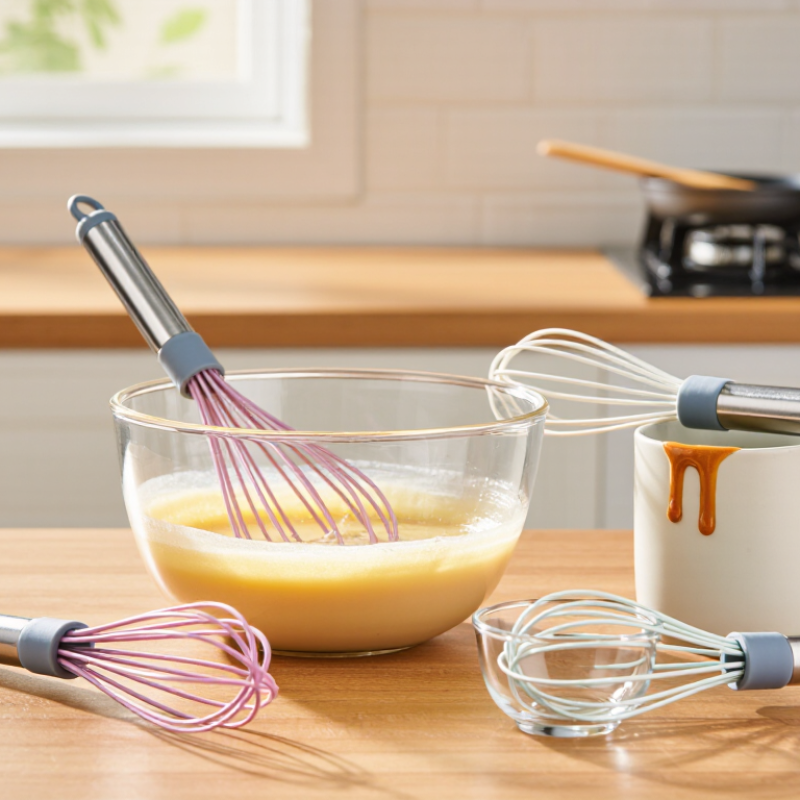
A silicone whisk set commonly includes several whisk sizes, though the exact pieces vary. A full-size balloon whisk has rounded loops for whipping cream or beating eggs in a mixing bowl. A smaller whisk fits narrow cups and saucepans. Some sets add a flat whisk, whose low profile helps stir gravy or scrape batter from a pan’s corners.
The wires are often metal coated with silicone, while the handle may be silicone or another comfortable material. Check the connection between the wires and handle; batter can collect there if the joint has gaps. The coating helps protect many nonstick surfaces, but it does not make every whisk suitable for every pan. Heat limits differ. Check the care label.
Some sets include a storage loop, a resting stand, or a small spatula. These extras can keep tools off a wet counter, but they are not guaranteed. In everyday baking, the small whisk is handy for mixing cocoa into milk without splashing. The larger one handles thicker mixtures better. A set may look complete, yet one useful size can matter more than several rarely used tools.
What a Silicone Whisk Set Includes—and What It’s Used For
How to read this chart: A set may include small, medium, and large silicone-coated whisks for different jobs. Smaller whisks are handy for cups and small bowls; larger ones suit mixing eggs, batters, and sauces in bigger bowls. The lengths shown are illustrative—actual set contents and dimensions vary. Silicone-coated heads are generally gentler on nonstick cookware; check the product’s care instructions and heat limits.
How Silicone Whisks Mix and Blend Ingredients
A silicone whisk set is useful when ingredients need to combine smoothly without scraping delicate cookware. Its looped wires move through a bowl, breaking up dry pockets and drawing liquid across them. A balloon-shaped whisk also traps air as it moves, helping cream, eggs, and batters become lighter. Small whisks suit cups and narrow pans; larger ones cover more of a mixing bowl.
For a basic vinaigrette, whisk oil into vinegar in a thin stream. The moving wires disperse the oil into small droplets, creating a temporary emulsion. Egg yolk can help stabilize that mixture. USDA FoodData Central lists raw whole egg at about 12.6 grams of protein and 9.5 grams of fat per 100 grams. Those components help explain why eggs enrich sauces and batters, though whisking alone cannot guarantee a lasting emulsion. Go slowly.
A silicone-coated whisk is especially handy in nonstick pans, where bare metal wires may scratch the surface. Use it to blend pancake batter, loosen lumps in gravy, or mix powdered ingredients into liquid. USDA FoodData Central reports whole milk contains about 88 grams of water per 100 grams, so it can readily carry dry ingredients through a batter. Still, a hurried whisk can leave flour pockets at the bowl’s edge. Scrape the sides, then whisk again. The difference is small, but visible.
Common Cooking and Baking Uses
A silicone whisk set helps with everyday mixing, from breakfast eggs to quick pan sauces. A small whisk works well in a mug or narrow bowl, where a larger one feels awkward. Use it to beat eggs for an omelet, blend oil and vinegar into a vinaigrette, or smooth lumps from gravy. Gentle strokes usually work better than fast, forceful stirring.
For baking, whisk flour, cocoa, baking powder, and salt together before adding wet ingredients. A medium whisk can combine pancake or muffin batter without requiring a mixer. It is also handy for stirring custard or pudding in a saucepan, especially when the whisk has a heat-resistant handle and head. Check the care instructions; not every silicone whisk is suited to high heat or a dishwasher. Thick dough is another matter. A whisk can struggle with it, and the wires may hold sticky batter between them. That part is easy to forget. Rinse the whisk soon after use, before dried batter turns cleanup into a chore.
What Is a Silicone Whisk Set Used For? - Common Cooking and Baking Uses | Whisk Type | Common Uses | Suitable Ingredients | Practical Note |
| Balloon whisk | Whipping, aerating, and mixing ingredients in a bowl | Egg whites, whole eggs, cream, and light batters | Its rounded, open shape helps incorporate air; use a bowl deep enough to limit splashing. |
| Flat whisk | Stirring and scraping across the bottom of a pan | Gravy, pan sauces, custards, and roux-based sauces | The flatter profile can reach into pan corners while stirring. |
| Mini whisk | Mixing small quantities and preparing quick emulsions | Vinaigrettes, marinades, dressings, and a single egg | Works well in small bowls, cups, and measuring jugs. |
| Narrow whisk | Blending ingredients in tall or narrow containers | Hot chocolate, sauces, and small batches of batter | Choose a whisk that fits comfortably without catching on the container sides. |
| General silicone-coated whisk | Everyday mixing in cookware with a coated cooking surface | Scrambled eggs, pancake batter, and stovetop sauces | Silicone-coated wires are intended to be gentler on many nonstick surfaces than bare metal; avoid cutting or scraping with the whisk. |
Use and care vary by product. Check the care instructions and temperature limits for your whisk before using it with hot cookware or placing it in a dishwasher.
Choosing a Whisk Shape for Each Task
What Is a Silicone Whisk Set Used For?
Choosing a Whisk Shape for Each Task
A silicone whisk set is useful for mixing, beating, and stirring without scratching many nonstick pans. The shape matters as much as the material. A balloon whisk has a rounded, roomy head that pulls air into egg whites, cream, and pancake batter. Use it in a deep bowl, where the wires can move freely. Small jobs matter. A compact whisk handles one egg, a little dressing, or a quick cup of cocoa without dragging out larger tools.
A narrow French-style whisk fits into small pots and corners, making it handy for gravy, custard, and smooth sauces. Its tighter wire shape gives good control, though it may not aerate as quickly as a balloon whisk. A flat whisk works well in shallow pans. Its low profile reaches across the bottom while you stir roux or loosen small browned bits. That takes practice. It can feel awkward in a deep bowl, so the right tool still depends on the dish.
For delicate cookware, silicone-coated wires can help reduce scratching, but inspect them for loose or damaged coating. Heat tolerance varies, so check the utensil’s care instructions and avoid leaving it in a hot pan. Rinse whisk wires soon after mixing sticky batter; dried residue can hide where the wires meet the handle. A set is convenient, but not every shape earns equal space in a drawer. Start with the tasks you actually cook.
Cleaning and Caring for Silicone Whisks
Rinse a silicone whisk soon after using it, especially after eggs, cream, or sticky batter. Warm water loosens residue before it dries around the wire-to-handle joint. Wash with mild dish soap and a soft sponge, moving between the loops rather than wiping only the outer wires. A small brush can reach narrow gaps. Easy to miss.
Many silicone whisks are dishwasher-safe, but check the care instructions first; handles and internal supports can differ. NSF/ANSI 184 sets a performance benchmark for certified residential dishwasher sanitizing cycles: a 99.999% reduction in bacteria under specified test conditions. That figure describes the tested cycle, not a guarantee that every load or utensil is sterile. Rinse off visible food before loading, and avoid crowding the whisk against heavier items. After washing, inspect the handle joint for grease or trapped batter, then let the whisk dry fully before storing it. Skip abrasive pads, which may roughen or damage the surface over time. If a lingering odor remains, a second careful wash may be needed. That small extra step is easy to forget.
