10 Restaurant Cooler Buying Tips for Global Buyers
A Restaurant Cooler is more than a cold cabinet; it protects ingredients, supports service, and affects daily energy costs. For global buyers, the right choice depends on the kitchen, local conditions, and dependable support after installation. A unit that performs well in a cool showroom may struggle beside a busy line in a hot kitchen. Small details matter.
This guide uses a clearly illustrative expert voice, not a real quotation: refrigeration specialist Elena Park says, “Buy for the busiest hour, not the quietest inspection.” That principle points buyers toward practical checks: usable shelf space, door clearance, temperature recovery, gasket fit, and airflow around the condenser. Check the details. A bright display and a low purchase price cannot tell you how quickly a cooler recovers after repeated door openings. Compare stated capacity with the pans and cartons your team actually stores.
Buyers operating across borders should also confirm electrical compatibility, climate ratings, delivery dimensions, and access to parts and service in the destination market. Request written specifications, warranty terms, and energy-use information; verify them against your kitchen’s needs. A few degrees can matter. So can a service delay. No model is perfect, and this outline cannot replace a site assessment or manufacturer documentation. Still, careful questions can prevent an expensive mismatch. The following ten tips offer a grounded starting point for comparing Restaurant Cooler options, without assuming one size or feature suits every operation.
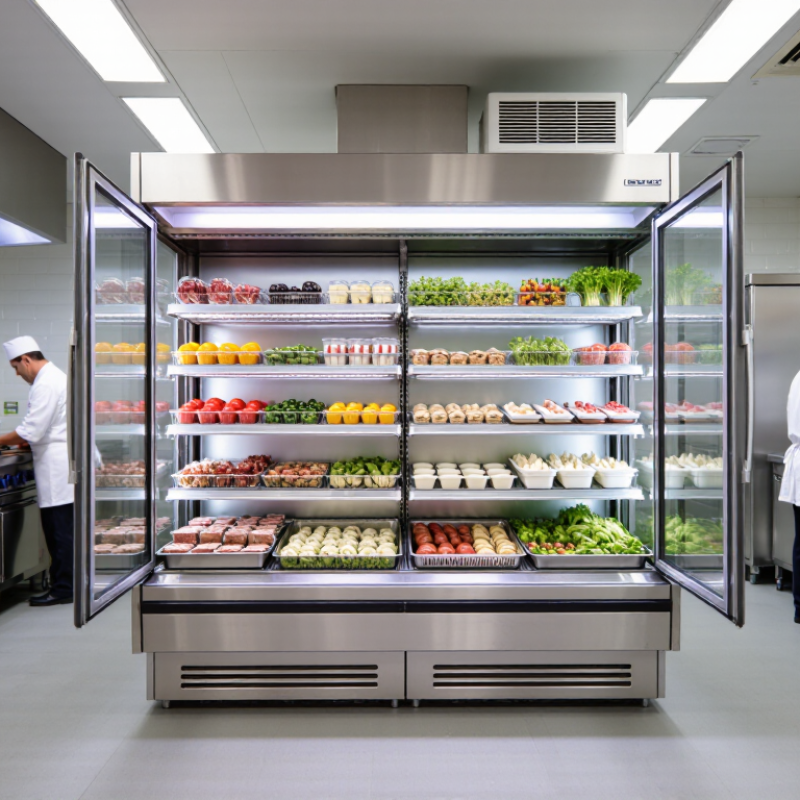
Assess Your Restaurant’s Cooling Needs and Operating Conditions
Before choosing a cooler, map the food it must hold and the busiest service period. List daily deliveries, peak prep volume, and items needing separate storage. A salad station may need frequent access, while backup meat needs stable temperatures and clear separation. The FDA Food Code sets 41°F (5°C) or below as a cold-holding benchmark in the United States. Treat it as a reference, then check the rules at the installation site. Measure twice.
Room conditions matter as much as menu plans. Record kitchen temperature during lunch rush, door-opening frequency, nearby ovens, and available ventilation clearance. A unit beside a hot range may struggle more than its specification suggests. Check the manufacturer’s stated ambient operating range and leave room for airflow and maintenance. Not just on paper.
ENERGY STAR reports that certified commercial refrigerators and freezers use about 20% less energy than standard models. Use this as a comparison point, not a guaranteed saving; actual consumption depends on loading, room temperature, and use. Review rated capacity alongside usable shelf space, annual energy use, and recovery after doors open. I would recheck the volume estimate after a week of service. Buyers often plan for average demand, then discover that Friday deliveries and tightly packed shelves change the picture. A simple temperature log during peak hours can reveal whether the proposed capacity and placement suit the real kitchen.
Compare Cooler Types, Capacities, and Layout Requirements
Restaurant cooler choice starts with the work pattern, not the catalogue capacity. Undercounter units suit prep stations with frequent, small-batch access. Reach-ins fit kitchens that need separate shelves for produce, dairy, and prepared foods. Walk-ins support bulk deliveries, but require floor space, insulated panels, and clear access for carts. Think about tomorrow’s delivery, too.
Rated volume can mislead. Shelves, containers, and required airflow reduce usable space. Estimate peak stock between deliveries, then check whether standard pans fit without blocking vents. The FDA Food Code sets cold holding at 41°F (5°C) or below for time/temperature control foods; buyers should verify the rules in each destination market. A crowded cabinet may struggle to recover temperature after repeated door openings.
Layout matters every shift. Measure door swing, aisle width, nearby heat sources, and the route from receiving to storage. Leave service access around the unit, as specified by its installation requirements. ENERGY STAR reports that certified commercial refrigerators and freezers are about 20% more energy efficient than standard models, making efficiency worth comparing alongside capacity. One detail is easy to miss: staff may prop open a poorly placed door. Recheck the floor plan with the people who will use it.
Check Energy Efficiency, Refrigerants, and Local Compliance
Before comparing prices, compare annual energy use, not just the cooler’s purchase label. ENERGY STAR reports that certified commercial refrigerators and freezers are about 20% more energy-efficient than standard models. Over years of daily operation, that difference can affect utility costs. Check the test conditions and capacity behind each figure. A cooler beside a hot prep line may use more energy than its rating suggests.
Refrigerant choice also affects climate impact and future service options. The IPCC Fourth Assessment Report assigns R-404A a 100-year global warming potential of 3,922, compared with 3 for propane (R-290). Lower impact is not the only consideration. Propane is flammable, so equipment design, installation, and service requirements matter. Ask suppliers for the refrigerant type, charge, safety documentation, and local technician support.
Rules vary by destination. For example, buyers shipping into the European Union should review Regulation (EU) 2024/573; U.S. buyers can check EPA refrigerant rules and SNAP listings. Confirm that the model’s refrigerant, electrical rating, plug, and food-storage configuration meet requirements where it will operate. Get written documentation before ordering. It is easy to overlook a plug or service restriction when focusing on cooling capacity.
Evaluate Build Quality, Service Support, and Total Ownership Costs
For global buyers, a cooler’s price tag says little about its real value. Inspect door hinges, gasket seams, drain placement, and interior corners; these are the parts staff touch or clean every day. Ask for cabinet material specifications, insulation details, and temperature-recovery test results under frequent door openings. A polished finish can hide weak hardware. It happens.
Service support deserves the same scrutiny as build quality. Before ordering, confirm local technician coverage, spare-parts availability, warranty response times, and whether control components can be diagnosed remotely. Request a written parts list and realistic delivery estimates for your destination. A cooler that waits weeks for a fan motor can cost more than its invoice suggests. EPA ENERGY STAR guidance reports that certified commercial refrigerators and freezers are about 20 percent more energy efficient than standard models. Treat that as a benchmark, not a promise: actual savings depend on room temperature, door use, maintenance, and loading.
Calculate total ownership costs across the expected service life: purchase, freight, installation, electricity, cleaning, repairs, and eventual replacement. Compare models using measured annual energy consumption, not only a generic efficiency label. Check voltage and plug requirements with a qualified installer before shipment; small mismatches can create expensive delays. Keep the assumptions visible. Energy tariffs and service access differ sharply by market, and an elegant spreadsheet can still be wrong.
Verify Supplier Credentials, Shipping, Installation, and Warranty Terms
Before comparing prices, verify the supplier’s registered business name, operating address, and years of relevant refrigeration experience. Request references from commercial buyers in your region, plus technical sheets for the exact cooler model. Check that listed electrical requirements and product certifications suit your destination market. Ask for evidence. A polished catalog is useful, but it does not prove reliable after-sales support.
Clarify shipping terms in writing: who arranges export packing, freight insurance, customs documents, and final delivery? Confirm the estimated dispatch date and total transit time, not just the factory lead time. Ask how the unit will be protected against vibration and moisture. Measure doorways, lifts, and the installation route before ordering; a cooler that cannot reach the kitchen is an expensive surprise. Measure twice. On arrival, photograph visible damage before moving or unpacking the unit, and follow the carrier’s claim instructions.
Installation details deserve equal attention. Confirm site power, drainage, required clearance, and whether a qualified local technician is included or arranged separately. Get the commissioning checklist and temperature test procedure. The warranty should state its duration and cover for parts, labor, travel, and freight. Ask who handles urgent faults and how quickly they respond. A low quote can still look attractive, and buyers may overlook installation costs. That is easy to miss. Request the complete terms before paying a deposit.
10 Restaurant Cooler Buying Tips for Global Buyers
Due-diligence priorities for evaluating supplier credentials, shipping, installation, and warranty terms.
How to read this chart: Scores are illustrative planning guidance on a 1–5 scale, not survey results or industry statistics. Use the checklist to structure supplier discussions and verify requirements for your destination and installation site.
