How to Choose the Right Car Emblems for Your Business?

Choosing the right car emblems for your business means balancing brand identity with practical performance. An emblem should look right on a vehicle, remain legible at a glance, and suit the conditions where it will be used. A chrome finish may feel premium, while a matte badge can appear understated. Small details matter. Branding expert Marty Neumeier writes, “A brand is a person’s gut feeling about a product, service, or organization.” That idea applies here: customers may form an impression before they read your company name.

Start by considering where each emblem will go. A badge on a curved tailgate may need different dimensions and mounting options from one on a flat fleet-vehicle door. Compare materials, finishes, edge quality, and attachment methods with the vehicle surface in mind. Ask suppliers for physical samples, clear specifications, and guidance on weather exposure and cleaning. Then check whether the emblem stays recognizable at its actual size—not only in a polished digital mockup.

Your choice should also match your business’s visual system. Consistent colors and proportions help a fleet look cohesive, while a carefully chosen finish can distinguish premium services. Still, appearance is not the whole story. A beautiful emblem that is hard to install or maintain may frustrate your team. I would not judge from a screen alone. Review samples under daylight, inspect them up close, and test the proposed placement before ordering in volume. This guide explores the key decisions, common trade-offs, and questions to ask before selecting Car Emblems for your business.
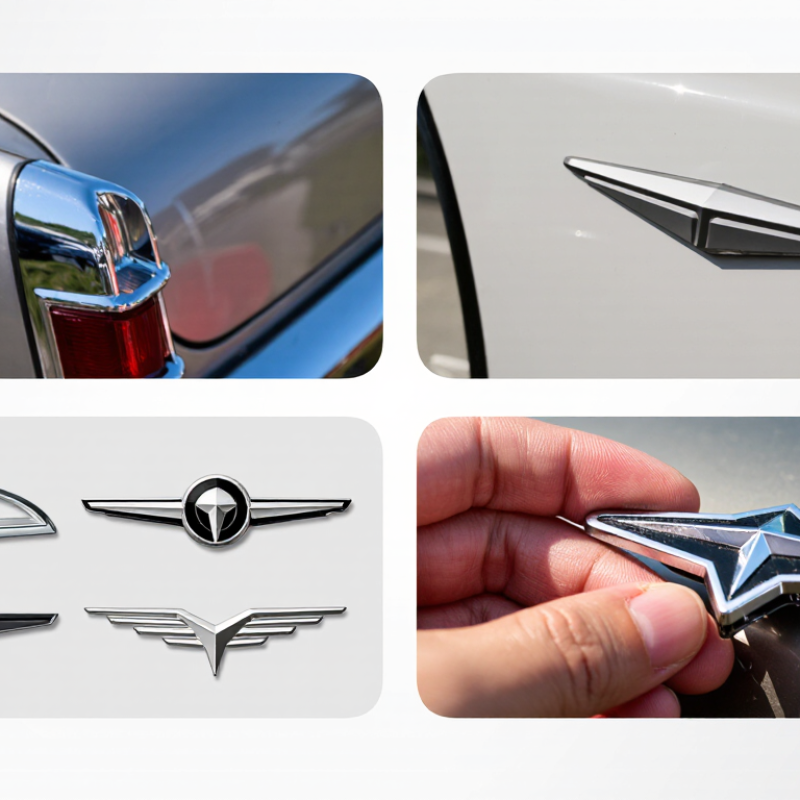
How to Choose the Right Car Emblems for Your Business?

Define the Purpose and Requirements of Your Business Car Emblems

Define what each emblem must accomplish before comparing designs. A fleet may need quick company identification at a loading site, while a sales vehicle may need a more polished, low-key appearance. Decide who will see it, where the vehicle usually travels, and whether the emblem is temporary or permanent. Keep it readable. A small symbol can disappear against tinted glass or a dark paint finish.

Set practical requirements for size, material, placement, and upkeep. Measure the available area on the actual vehicle, not just a brochure image. Check how sunlight, rain, road dust, and frequent washing may affect the finish. A mock-up that looks balanced on a desk can feel oversized on a curved door. That is easy to miss. Consider how installation or removal could affect the paint, and ask a qualified supplier about suitable attachment methods. Make a simple sample first; business needs can change, and an early choice may not fit every vehicle.

Tips: Photograph the vehicle in daylight, then review a scaled design on the image. Check readability from several steps away. Record the emblem’s dimensions, finish, and placement so replacements stay consistent. Revisit the brief after a trial fit; small adjustments often matter.

Compare Emblem Types, Materials, and Mounting Methods

Choosing a car emblem starts with its job. A raised metal badge adds depth and a premium feel, but it can catch dirt around its edges. Flat decals sit close to the paint and suit clean, simple graphics. Domed resin emblems add a glossy surface and protect printed details. They may show scratches more clearly than expected. Consider the vehicle’s shape, viewing distance, and washing routine before selecting a style.

Material affects both appearance and service life. Stainless steel resists corrosion and keeps a crisp finish, while aluminum is lighter and easier to form. ABS plastic supports detailed shapes and consistent colors, though strong sun can eventually fade some finishes. Ask for samples when possible. Check color under daylight, not just showroom lighting. A small mismatch can look obvious beside a painted panel.

Mounting matters just as much. Adhesive backing avoids drilling and works well on smooth, clean surfaces; temperature and surface texture can affect its hold. Stud-mounted emblems offer a firm mechanical attachment, but require accurate holes and careful sealing. Magnetic mounts allow quick changes, yet may shift on curved or dirty panels. Test the position with masking tape first. Measure twice. Even a careful installer can misjudge a curve, so leave room to revise the layout.

Match the Emblem Design to Your Brand Identity

A car emblem should feel like a small, moving part of your brand identity, not an isolated decoration. Start with the shapes and colors already used in your signage, packaging, or website. If your visual style is quiet and precise, a crowded emblem may send the wrong message. Keep it legible. Check the design at actual size, because fine lines that look crisp on a screen can disappear on a curved vehicle panel. A simple silhouette and strong contrast often hold up better from a few metres away.

Material and finish also affect how the design feels. Brushed metal can suggest restraint, while a glossy surface catches light and draws attention. Neither is automatically right. Consider the vehicle’s paint color, where the emblem will sit, and how often that area gets washed or exposed to weather. Ask for a physical sample, then view it outdoors in shade and direct sunlight. Check the edges, color match, and readability from different angles. I would not approve a design from a digital mock-up alone; it is convenient, but it can hide scale problems. One detail may still feel off, and that is worth reviewing before production.

Evaluate Durability, Production Quality, and Total Cost

A car emblem may look small, but its finish faces years of sun, rain, road grit, and washing. S&P Global Mobility reported that the average age of U.S. cars and light trucks reached 12.6 years in 2024. That is a useful reminder: evaluate expected service life, not just showroom appearance. Ask suppliers for coating-thickness records, adhesion checks, and corrosion-test results. The 2016 IMPACT study by NACE International estimated corrosion costs at US$2.5 trillion annually, or 3.4% of global GDP. This is a broad industry estimate, not an emblem-specific failure rate. Still, it shows why protective finishes deserve attention.

Small parts matter.

Production consistency matters too. Inspect sample emblems for sharp edges, uneven plating, weak adhesive coverage, and color variation under direct light. Ask whether tests follow ASTM B117 salt-spray procedures, but do not treat test hours as a guaranteed number of years in service. Real exposure differs.

A practical total-cost comparison should include tooling, unit price, freight, inspection, installation time, rejected parts, and likely replacement labor. A cheaper emblem can cost more if its adhesive lifts after one winter. I have seen buyers overlook installation time; it is easy to do. Request a pilot batch and record defects before approving a larger order. That small step may delay a launch, but it can reveal flaws that polished samples hide.

Select a Supplier and Confirm Customization Details

Choosing a supplier starts with more than comparing prices. Ask for photographs of finished emblems and a physical sample made with the intended material and finish. A sample can reveal sharp edges, uneven color, or lettering that looks crowded at actual size. Check how the emblem attaches, too. Adhesive backing may suit a smooth surface, while some applications need a different mounting method. Small details matter.

Share a clear specification sheet with dimensions, artwork, colors, finish, attachment method, and expected quantity. Ask the supplier to confirm each item in writing before production. Request a digital proof, then compare it with your original artwork; small lettering and thin lines can change noticeably when scaled down. Confirm sample and production timelines, packaging, quality checks, and what happens if a batch differs from the approved proof. Ask twice. I would not assume that “custom” automatically means every detail is included; that assumption can be costly. A slightly longer approval stage may prevent a box of emblems arriving with the wrong shade or backing. Keep the final proof and agreed specifications on file.

How to Choose the Right Car Emblem Supplier

Suggested evaluation priorities for selecting a supplier and confirming customization details. These weights are a planning framework, not results from a market survey.

Before ordering, confirm emblem material, dimensions, finish, attachment method, artwork proof, minimum order quantity, lead time, and sample approval in writing.

Article Source: