How to Choose the Best Low Noise Fan?

Choosing the best Low Noise Fan means balancing quiet operation with useful airflow, not simply picking the model with the lowest advertised noise rating. A fan rated at 20 dBA may sound different in a small bedroom than in a large, furnished living room. Room size, distance, and background noise all affect what you actually hear.

Check the fan’s noise rating alongside its airflow, often listed in cubic feet per minute (CFM), and compare models at similar speed settings. Manufacturer measurements may use different conditions, so treat small rating differences cautiously. Look for adjustable speeds, a stable base, and a motor designed to reduce vibration. On a desk, even a faint rattle can become distracting. Small details matter.

Think about where and when you will use it. A bedroom fan may need a genuinely quiet low setting, while a workshop or kitchen may call for stronger airflow. Read reviews for recurring comments about humming, clicking, or noise that develops over time. Cleanable grilles and accessible blades can also help maintain performance. I would not assume that a premium price guarantees a quieter fan; specifications and real-world feedback deserve a closer look. There is no perfect answer. The right choice depends on your space, comfort, and tolerance for sound—and those can be harder to measure than a number on a product page.
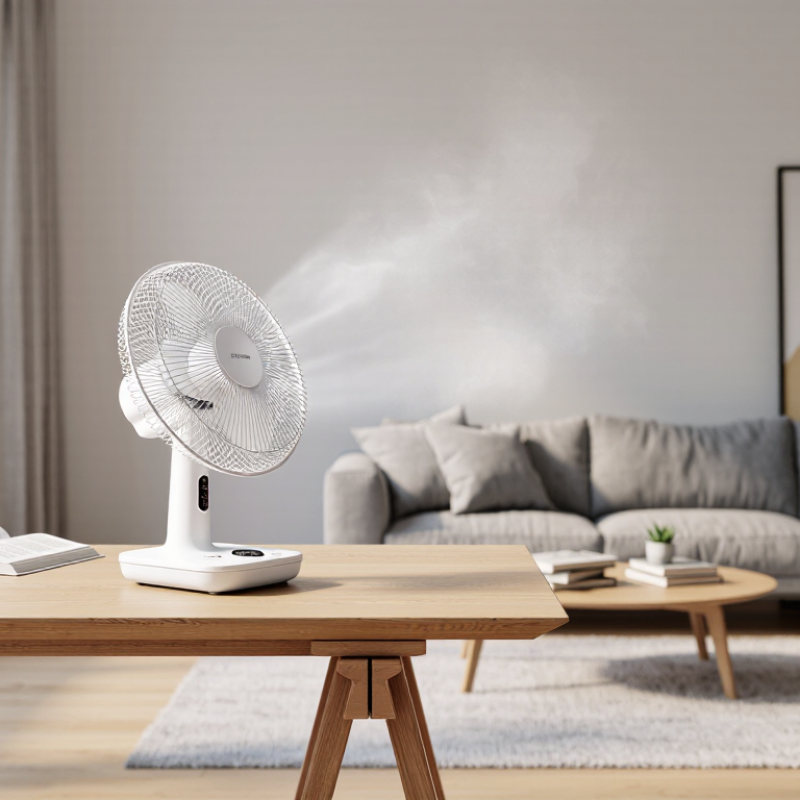
How to Choose the Best Low Noise Fan?

How Low-Noise Fans Work and What Affects Their Sound

A low-noise fan does not simply run quietly by chance. Its motor turns the blades, moving air through and around the housing. Sound can come from motor vibration, turbulent airflow, or parts that are loose or poorly fitted. Higher speeds often move more air, but may also produce a sharper hum or a stronger rushing sound. Quiet operation is a balance. Carefully shaped blades and a stable motor can help reduce unwanted noise, though no fan is completely silent.

The room and installation affect what you hear. A fan resting on a hollow desk may transmit vibration, while dust on the blades can disrupt smooth airflow. Compare sound ratings at similar speeds and airflow levels; a low decibel figure alone does not tell the whole story. Distance and room acoustics matter, too. Listen from where the fan will actually be used. Even then, numbers can feel incomplete: a soft, steady hum may be less distracting than a quieter but uneven buzz. Check that the fan sits securely, and notice whether its sound changes as you adjust the speed.

How to Choose the Best Low-Noise Fan

Approximate Sound Levels for Everyday Comparisons

A low-noise fan is often rated around 25–35 dBA at a stated distance; the chart uses 30 dBA as a representative value. Actual sound depends on fan speed, airflow turbulence, vibration, installation, and measurement distance. Compare fan ratings at the same distance and speed setting. Lower speed and reduced vibration can help keep sound down.

Assess Your Room, Airflow Needs, and Noise Limits

How to Choose the Best Low Noise Fan?

Assess Your Room, Airflow Needs, and Noise Limits

Measure the room before comparing fans. Note its floor area, ceiling height, and whether doors usually stay open. A compact bedroom with a closed door needs a different airflow pattern from an open living area. Check for obstacles, too: curtains, shelves, and furniture can block circulation. Details matter.

Estimate how much air you need moved, then compare airflow ratings across models using the same units. A fan that is too small may need to run at its highest, often loudest, setting. An oversized fan can waste space and create an unwelcome draft. I’d reconsider any choice based on room size alone; layout and daily use matter too. A desk fan may suit one person, while shared spaces need broader circulation.

Set a noise limit that fits the room’s purpose. For sleep or focused work, listen for hum and tonal buzzing, not just the published decibel figure. Ratings may use different test conditions, and hard floors can make sound seem sharper. If possible, test the fan at the speed you’ll actually use, from your usual seat or bed. Quiet is relative. A little airflow noise may be acceptable if the room feels comfortable; it’s worth checking that assumption before buying.

Compare Fan Types, Noise Ratings, and Performance

How to Choose the Best Low Noise Fan?

Fan type affects both sound and airflow. Axial fans move air directly and suit open spaces, but can create a noticeable hum at high speed. Centrifugal fans push air through ducts or tight spaces more effectively, though their motor and airflow may sound different. Many DC fans offer finer speed control and can run quietly at low settings. Still, a low-speed fan may not move enough air for your room.

Compare noise ratings in decibels, or dBA, at the same distance and operating speed. A rating without test conditions is hard to judge. Check airflow, usually listed in CFM, and static pressure if the fan must push air through a filter or duct. One common mistake is choosing the lowest dBA number alone. A fan can be quiet on paper yet disappoint when installed close to a wall or vibrating against a loose panel. That matters.

Tips: Compare noise and airflow at the speed you will actually use. Check the test distance, secure the mounting, and leave space around the intake. Listen for a low hum as well as rattling; they can point to different problems. Ratings help, but your room’s layout can change what sounds quiet.

Check Fan Size, Controls, Installation, and Maintenance

Choose a fan sized for the room, not just one that looks right. For a ceiling fan, check blade span, ceiling height, and the manufacturer’s recommended coverage. An oversized fan can create an uncomfortable rush of air; an undersized one may need to run faster. Compare sound ratings only when they use the same unit and test conditions. The World Health Organization’s Night Noise Guidelines for Europe recommend bedroom noise below 30 dB(A) LAeq at night and 45 dB(A) LAFmax. These are room-level health guidelines, not product limits. A fan’s rating alone cannot predict the sound in your bedroom.

Controls matter at bedtime. Look for several speed settings, including a genuinely slow mode, and check whether the light and fan operate independently. A wall control that is incompatible with the motor can cause humming or erratic speed changes. For sound-test details, AMCA Publication 300-14 describes measuring fan sound in a reverberant room. Ask for comparable test data rather than trusting a vague “quiet” label. I’d also check whether the display or control beeps; a tiny beep feels louder at 2 a.m.

Installation and upkeep affect noise more than buyers sometimes expect. Secure the mounting bracket to suitable structural support, keep blades level, and tighten fasteners after installation. A slight wobble can turn into a repetitive ceiling rattle. Dust the blades regularly; buildup can unbalance them. If a new scraping or bearing-like sound persists, stop and inspect the unit instead of assuming it will settle down.

Choose a Fan That Fits Your Space and Budget

Choosing a quiet fan starts with the room, not the price tag. Measure the floor area and ceiling height, then check the manufacturer’s recommended coverage. In a compact bedroom, a large fan may create an uncomfortable breeze even on its lowest setting. For a desk or bedside table, check the base footprint and whether the airflow reaches your usual seat. Small details matter.

Compare noise ratings at the same speed and measurement distance; otherwise, the numbers may mislead. A fan rated at 30 dBA is generally quieter than one rated at 40 dBA, but room echoes and placement change what you hear. Listen in person if possible. A showroom is not a bedroom, though. That difference deserves thought.

Set a total budget that includes purchase price and expected electricity use. ENERGY STAR reports that certified ceiling fans are, on average, 60% more energy-efficient than conventional fan-and-light models. That figure concerns energy use, not noise, and savings vary with use and local electricity rates. Check airflow, sound data, warranty terms, and replacement-part availability before buying. A cheaper fan can still be the sensible choice, but I would not judge it by price alone.

How to Choose the Best Low Noise Fan? - Choose a Fan That Fits Your Space and Budget

Compare common fan types by typical use, approximate noise, and indicative price. Choose based on the space you need to cool, the airflow you need, and your budget.

Fan Type Typical Low-Setting Noise Best For Space & Airflow Notes Typical Price Range (USD) What to Check Before Buying
Small desk fan About 20–35 dBA Personal cooling at a desk or bedside Compact; airflow is mainly useful within a few feet. $15–$40 Look for multiple speeds, a stable base, and a low-speed setting that remains quiet.
Air circulator About 25–40 dBA Moving air across a bedroom or small living area Directs air in a focused stream; placement and room layout affect circulation. $25–$80 Check the range of tilt, speed controls, and whether the lowest setting suits nighttime use.
Tower fan About 30–45 dBA Bedrooms or shared rooms where floor space is limited Tall, narrow footprint; oscillation can spread airflow across a wider area. $40–$150 Compare low-speed noise, oscillation settings, timer controls, and ease of cleaning.
Pedestal fan About 30–45 dBA Larger rooms and adjustable, elevated airflow Height and tilt are adjustable; usually needs more floor space than a tower fan. $30–$120 Check stand stability, height adjustment, oscillation, and the noise of the motor at low speed.
Box fan About 35–50 dBA Budget airflow near a window or in utility spaces Broad airflow; its square frame is designed for a windowsill or floor placement. $20–$60 Check dimensions, window fit, grille design, and whether the lowest speed is quiet enough for your room.
Ceiling fan About 25–40 dBA when properly installed Regular air circulation in a bedroom or living room Uses ceiling space and circulates air throughout the room; installation and ceiling height matter. $80–$300 Check room-size guidance, installation requirements, blade balance, and motor noise.

Noise and prices are approximate and vary by model, speed, room acoustics, and measurement distance. For the quietest operation, compare noise ratings at the same speed and check independent reviews where available.