How to Choose a Paint Booth Manufacturer
Choosing a Paint Booth Manufacturer is not simply a price comparison. It is a decision about airflow, finish quality, energy use, and dependable support. Grand View Research’s Global Paint Booth Market report estimates the market’s size and growth, but market forecasts cannot tell you whether a specific booth suits your shop. Your parts, coating process, production volume, and available floor space matter more.
Look closely at the details. Ask how the manufacturer calculates airflow for your booth dimensions, what filtration options are available, and how often filters need replacement. Request references from facilities with similar work. A booth that looks impressive in a showroom may behave differently when it runs through a full shift. Small details count.
U.S. Environmental Protection Agency materials on spray-applied coatings also highlight the importance of controlling overspray and emissions. Use those resources as a starting point, then have qualified professionals assess your process and site. Verify each manufacturer’s technical claims against documented specifications, service records, and a clear installation scope.
A credible industry-expert quotation should be traceable to a named person and source; I cannot verify one from the material provided, so I will not invent it. That matters. Before choosing a Paint Booth Manufacturer, compare operating costs alongside the purchase price, and ask who handles commissioning, maintenance, and troubleshooting. The right choice is rarely the flashiest one. Sometimes, the best answer is to slow down and ask better questions.
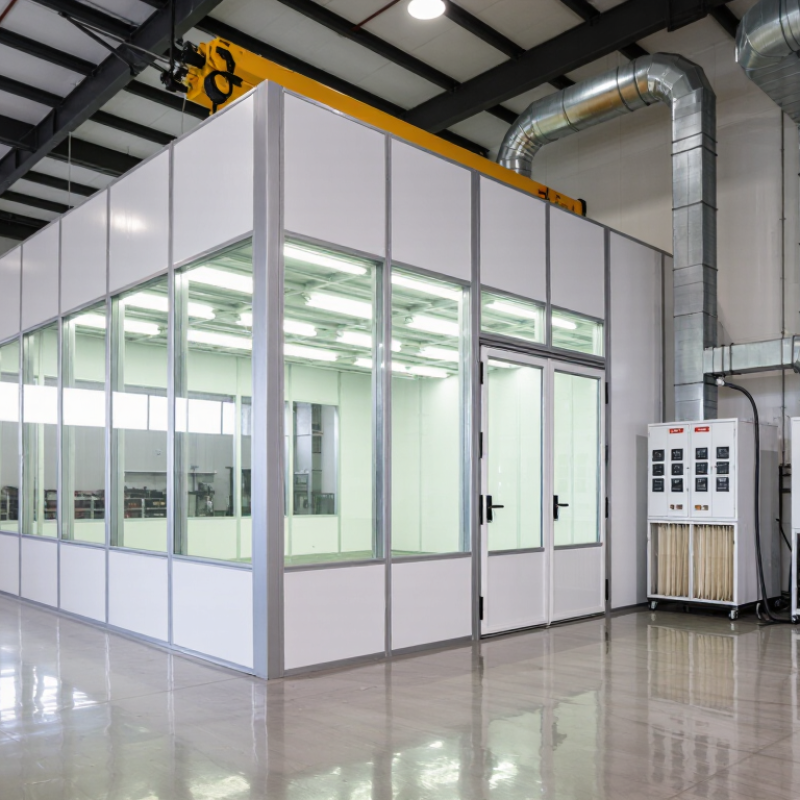
Define Your Paint Booth Requirements and Operating Conditions
Before comparing paint booth manufacturers, define the work the booth must handle. Record the largest part’s dimensions, weight, and loading method, including carts or overhead fixtures. Estimate daily batches, color changes, and cleaning time between jobs. Small details matter. An extra 20 centimeters of clearance can prevent awkward handling, but it also affects booth size and airflow needs. Use actual production data where possible, not figures based on an ideal shift. Your first estimate may be wrong.
Describe the operating environment in measurable terms: temperature, humidity, dust sources, and available floor space. Specify the coating process, expected spray volume, flash-off needs, and curing temperature if curing is required. Confirm electrical supply, compressed-air capacity, exhaust routing, filter access, and service clearances with qualified site personnel. Measure twice. Ask manufacturers to explain how their proposed airflow and filtration suit your parts and work rate. Request key assumptions in writing, including how performance may change as filters load or doors open. Do not hide uncertainty. If product mix or output may change, identify that early; a booth sized tightly for today can become a bottleneck.
Compare Manufacturer Experience, Expertise, and Product Range
When comparing paint booth manufacturers, look beyond years in business. Ask which industries they serve, how many similar installations they have completed, and whether you can speak with a recent customer. A booth for a small refinishing shop differs from one built for long components or high daily throughput. Experience matters most when it matches your actual process.
Check the team’s technical depth. Can engineers explain airflow balance, filter loading, heat recovery, and controls in plain language? Ask for drawings, commissioning records, and maintenance intervals. In its 2024 market analysis, Grand View Research estimated the global paint booth market at about US$1.4 billion in 2023 and projected continued growth through 2030. That expansion makes product range important: compare crossdraft, semi-downdraft, and downdraft designs, plus booth dimensions, heating options, and automation. Match each feature to your parts and workflow, not a brochure photo.
Inspect the details. Request airflow readings from a comparable installation, and ask how technicians diagnose uneven capture when filters begin to load. Confirm whether replacement filters and service support are readily available. A polished proposal is not proof of a reliable booth. I would still want to see a working installation. That takes time. Manufacturers may also have gaps in their experience; ask what they would change after a year of operation.
Evaluate Booth Design, Safety Features, and Regulatory Compliance
A paint booth should match the parts, coatings, and daily workload—not just the available floor space. Ask the manufacturer for a booth layout showing airflow direction, exhaust locations, filter access, and operator clearance. Look for stable, documented airflow and practical ways to check filters and pressure. Request performance data for the proposed configuration, not a generic model sheet. Small details matter. A filter that is difficult to reach can be ignored during a busy shift. Safety features deserve the same scrutiny. Discuss fire protection, grounding, emergency stops, lighting, and any electrical equipment used inside the booth. Ask how ventilation and other safeguards respond if a fan or control fails. A polished sales drawing is not proof of safe operation.
Compliance depends on the booth’s location, use, and applicable codes. Ask the manufacturer which standards and local requirements the design is intended to address, then verify them with the relevant authority or a qualified safety professional. Requirements vary. Request installation instructions, equipment specifications, maintenance schedules, and test records, including airflow measurements where applicable. Confirm who handles permits, inspections, and commissioning; responsibilities can otherwise fall between supplier and installer. Before signing, compare the documents with your actual coating process and site conditions. I would not assume that a compliant booth design guarantees a compliant workplace. The operator’s procedures, training, and maintenance records matter too—and those details are easy to underestimate.
Assess Customization, Installation, and After-Sales Support
A paint booth should fit the work, not force the work to fit the booth. Ask manufacturers to document options for booth dimensions, airflow, filtration, lighting, and controls. Bring real measurements: vehicle or part size, door clearance, ceiling height, and daily production volume. EPA’s 2020 National Emissions Inventory organizes emissions estimates by pollutant, source, and location; use local emissions data when discussing exhaust and filtration needs. Custom features sound attractive, but every change should have a clear operating reason.
Installation is part of the purchase. Request a site survey, written utility requirements, a delivery schedule, and a commissioning checklist. Confirm who coordinates electrical work, ducting, and airflow testing. BLS reported 2.6 million nonfatal workplace injuries and illnesses in private industry during 2023. That figure is not specific to paint booths, but it underlines why operators need practical training and clear safety procedures before production starts. Ask the manufacturer to show how training and handover are handled.
After-sales support matters when filters clog or a fan develops vibration. Check response hours, spare-part availability, warranty exclusions, and remote troubleshooting options. Ask for a maintenance schedule with actual inspection intervals, not “service as needed.” Get one reference from a facility with similar booth dimensions and workload. And listen carefully. Vague answers are a warning. A small omission in the service plan can become a costly delay.
Compare Total Costs, Delivery Times, and Supplier Reliability
Choosing a paint booth manufacturer means comparing more than the quoted equipment price. Ask for an itemized estimate covering freight, installation, site preparation, electrical work, filters, and operator training. Check expected energy use and the cost of replacement parts. A lower quote can become expensive if key services are excluded. It is easy to overlook small recurring costs, especially when comparing proposals with different scopes.
Tips: Request a written delivery schedule with design approval, production, shipping, and installation milestones. Confirm which delays could change the date. Ask for recent customer references and how service requests are handled after installation. Specific answers matter.
Supplier reliability shows in the details. Compare response times, technical documentation, warranty terms, and access to replacement components. Ask who will coordinate the project and what happens if a part arrives damaged. A firm delivery promise is useful, but evidence is better: look for clear updates and realistic timelines. If one proposal is vague, request clarification before choosing. Even careful planning cannot remove every delay, so allow some room in your schedule.
How to Choose a Paint Booth Manufacturer — Compare Total Costs, Delivery Times, and Supplier Reliability | Comparison factor | Supplier A
Example quote | Supplier B
Example quote | Supplier C
Example quote |
| Booth configuration | Enclosed spray booth with heated curing | Enclosed spray booth with heated curing | Enclosed spray booth with heated curing |
| Quoted equipment price | $85,000 | $102,000 | $76,000 |
| Estimated freight | $6,000 | $4,000 | $9,000 |
| Estimated installation | $9,000 | $7,000 | $12,000 |
| Estimated site electrical work | $5,000 | $3,000 | $8,000 |
| Estimated 5-year energy cost | $30,000 | $24,000 | $36,000 |
| Estimated 5-year routine maintenance | $15,000 | $12,000 | $20,000 |
| Estimated 5-year total cost | $150,000 | $152,000 | $161,000 |
| Quoted delivery lead time | 14–18 weeks | 10–14 weeks | 18–24 weeks |
| Warranty stated in example | 1 year on equipment; confirm coverage and exclusions | 2 years on major components; confirm labor coverage | 1 year on equipment; confirm parts availability |
| Delivery-performance evidence to request | Recent on-time delivery record and project references | Recent on-time delivery record and project references | Recent on-time delivery record and project references |
| Service and parts checks | Confirm local service coverage, response time, and filter availability | Confirm local service coverage, response time, and filter availability | Confirm local service coverage, response time, and filter availability |
| Key items to verify before selection | Scope of installation, energy assumptions, and written delivery schedule | Warranty exclusions, commissioning scope, and written delivery schedule | Site-preparation costs, parts lead times, and written delivery schedule |
Example comparison only: supplier profiles and figures are illustrative, not actual vendor quotes or market averages. Costs depend on booth size, specifications, location, site conditions, energy use, and maintenance needs. Request itemized written quotes and verify delivery and service claims with references before making a decision.
