Why Choose a Heavy Duty Diesel Engine Welding Machine?
A welding job can begin far from a reliable outlet: beside a pipeline, on a farm, or at a repair site with mud around the service truck. In these conditions, choosing a Heavy Duty Diesel Engine Welding Machine is about more than amperage. It is a decision about dependable power, transport, fuel use, and the demands of the workday. The right machine can support welding and, where equipped, provide auxiliary power for compatible tools.
The U.S. Bureau of Labor Statistics reports that welders, cutters, solderers, and brazers held about 418,200 jobs in 2023. Its Occupational Outlook Handbook projects roughly 45,800 openings each year from 2023 to 2033, including openings from workers leaving the occupation. These figures describe the wider workforce, not machine sales, but they show how much industrial and repair work depends on welding skills. Equipment choices matter.
Still, diesel power is not automatically the best fit. A buyer should compare rated welding output, duty cycle, engine service requirements, fuel capacity, noise, and the actual load expected on site. Look closely at the nameplate and manufacturer specifications. A larger machine may bring unnecessary weight and operating cost for light repairs. That trade-off is easy to overlook. This guide explains where heavy-duty diesel units make practical sense, what performance figures mean, and which questions help prevent a costly mismatch.
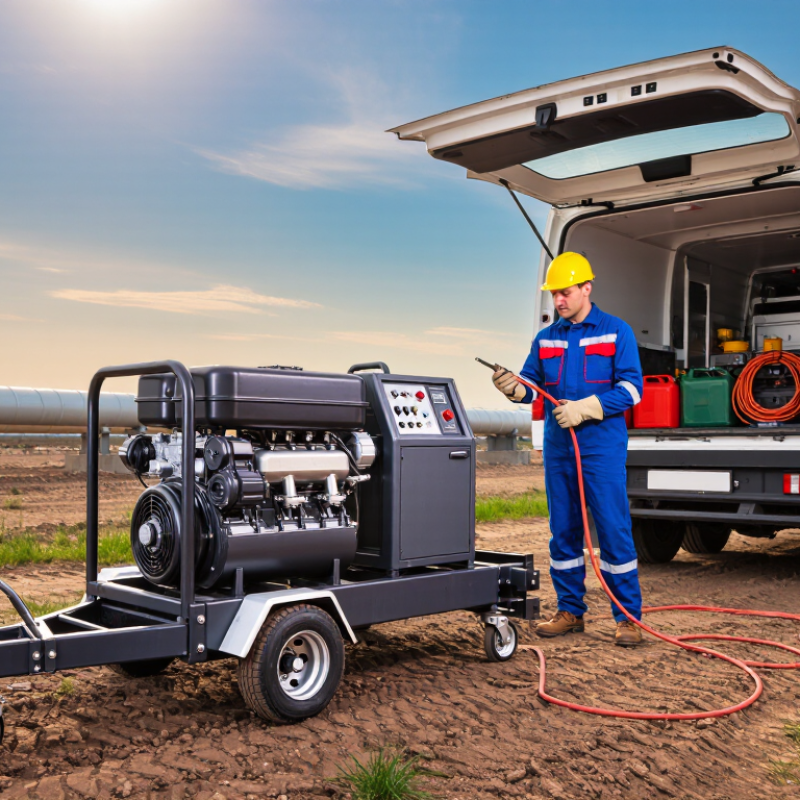
What Is a Heavy-Duty Diesel Engine Welding Machine?
Why Choose a Heavy Duty Diesel Engine Welding Machine?
A heavy-duty diesel engine welding machine is a self-contained field unit. A diesel engine drives an alternator, which supplies welding current and, on many models, auxiliary electrical power. It can operate where utility power is unavailable, making it useful for remote repairs, construction sites, and maintenance yards. Operators should compare rated welding output, duty cycle, and auxiliary power rather than relying on the “heavy-duty” label alone. That label is not a universal performance standard.
Fuel choice matters, but the numbers need context. The U.S. Energy Information Administration reports that diesel contains about 10% more energy per gallon than gasoline. This describes fuel energy, not guaranteed machine runtime. Actual consumption depends on load, engine condition, and maintenance. A machine running a steady arc may use fuel differently from one powering tools between welds.
Tips: Check the duty-cycle rating at the amperage you expect to use. Inspect cables, air filters, and cooling passages before a long shift. Keep a simple fuel-and-runtime log; it can reveal patterns, though site conditions make comparisons imperfect. A common oversight is sizing only for welding output and forgetting the generator load.
How Its Engine and Welding System Work Together
A heavy-duty diesel engine welding machine links two systems: a power source and an arc controller. The engine turns the generator, which produces electricity for welding. That chain matters. When an electrode touches steel, the welding circuit must deliver enough current to establish and maintain an arc. Controls adjust output to suit the process and material thickness, while the engine governor responds to changing electrical demand by regulating engine speed.
On a worksite, these parts are only as useful as their setup. A long cable run can cause voltage drop, and loose connections may make the arc erratic. Check the leads, work clamp, fuel, and ventilation before striking an arc. Small details count. During a steady weld, the engine may sound consistent, but the control system is doing the finer work of managing current. This pairing supports welding away from grid power, though it does not remove the need to match output and duty cycle to the job. Cold starts, dust, and altitude can also affect performance. Real conditions are rarely perfect. The machine still needs sensible setup and regular inspection.
What Features Support Reliable Field Performance?
Why Choose a Heavy Duty Diesel Engine Welding Machine?
What Features Support Reliable Field Performance?
A heavy-duty diesel engine welding machine must deliver steady output far from a workshop. On a repair site, it may run beside a muddy access road or beneath a temporary shelter. Stable current helps maintain an even arc when welding thick sections. Check the rated output and duty cycle against the actual job, not just the machine’s peak rating. That matters.
A well-sized fuel tank can reduce refueling stops during long shifts. Clear gauges make fuel level and engine temperature easier to monitor outdoors. Reliable cold starting is useful on frosty mornings, while effective cooling helps during sustained work in warm weather. Still, no machine performs well if its air intake is clogged with dust. Accessible filters and service points can make routine maintenance less frustrating.
Field-ready construction also counts. A sturdy frame, secure lifting points, and practical wheel placement help with uneven ground. Vibration isolation can protect components over time, though it does not replace regular inspection. Look for controls that remain legible in poor light and connections that are protected from dirt and moisture. Small detail. Before choosing, consider whether the machine can power the electrodes and accessories your crew uses. A little extra capacity may help, but excessive size adds weight and fuel needs.
How to Choose a Machine for Specific Welding Needs
Choosing a heavy duty diesel engine welding machine starts with the work, not the largest amperage on the specification sheet. Check the electrode sizes, material thickness, and welding processes your crew uses most. A machine for occasional repairs on steel gates may not suit continuous work on thick structural sections. Look at rated output and duty cycle together. A high current rating means little if the machine must cool after brief operation.
Consider where the machine will run. On a remote site, measure access routes, estimate daily operating hours, and check whether the fuel tank supports a full shift. Muddy ground and frequent repositioning make frame design and lifting points important. Listen to the machine under load, if possible. Noise matters near occupied work areas. Also compare auxiliary power needs, since grinders and lights may share the generator. Small details add up.
Match the controls and connections to the operators. Clear current adjustment and accessible terminals can reduce setup delays, especially when gloves are on. Review service access, filter availability, and the maintenance schedule before buying. A machine that is hard to service can lose valuable work time. I would also leave some capacity for future jobs, but not pay for output that will sit unused. That balance is easy to misjudge. Test the machine with the actual leads, rods, and materials planned for the job.
