Choosing a Diesel Fuel Generator is not just a matter of matching a product’s kilowatt rating to a building. The decision depends on starting surges, operating hours, site conditions, and the consequences of an outage. A pump motor may briefly demand far more power at startup than its running load suggests. That detail can change the size of the generator you need.
Market reports show why this equipment remains important. Grand View Research estimated the global diesel generator market at about USD 17.2 billion in 2023. That figure describes market value, not the performance of any specific machine. For practical selection, consult the manufacturer’s rating definitions and an experienced application engineer. As a useful engineering rule: “Size for the actual load, including startup demand—not the nameplate total alone.” Treat that as guidance, not a verified quotation from a named expert.
A reliable choice begins with a careful load list: essential circuits, motor starting currents, expected runtime, and future additions. Check whether the unit is rated for standby or continuous use; those ratings are not interchangeable. Then consider fuel storage, ventilation, noise, maintenance access, and how the generator will respond to local temperature and altitude. Small oversights matter. A set that fits neatly on paper may struggle in a hot, enclosed space. This guide will help you compare capacity, duty rating, efficiency, controls, and service support—while recognizing that no single model is right for every site. Verify specifications with the manufacturer before purchase.
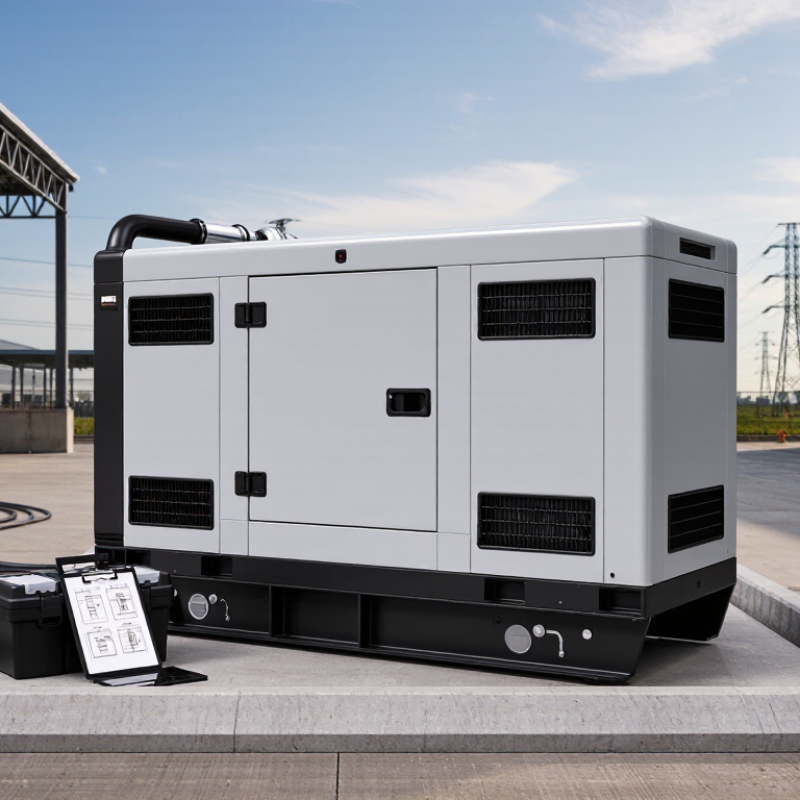
Choosing a diesel fuel generator starts with a clear load list. Record each essential appliance’s running demand in kilowatts, or kW. Include lighting, refrigeration, pumps, and control systems. Use nameplate data where available, but remember that actual demand can vary. A small workshop might draw 8 kW steadily, yet need much more briefly when its compressor starts. Add essential loads, not every device you own. Leave a sensible margin for growth and operating conditions.
Motor starting demand needs separate attention. Motors can surprise you. A pump or air compressor may briefly draw several times its normal current, creating a high demand in kilovolt-amperes, or kVA. Check the motor’s starting data or ask a qualified electrician to verify it. Compare that surge with the generator’s starting capability, not just its running kW rating. Also check power factor: kW describes useful power, while kVA reflects the electrical load the generator must supply. A neat spreadsheet can still miss a short startup surge.
Tips: Start large motors one at a time, where practical. Note which loads can wait, and check voltage dip limits for sensitive equipment. If the figures feel uncertain, get the load list reviewed before choosing a generator.
Before comparing kilowatts, match the duty rating to how the generator will actually run. ISO 8528-1 defines four common ratings, and they are not interchangeable. ESP is for emergency standby during a utility outage, with limited annual operating hours. It is not intended for routine daily power. LTP covers limited-time operation at a declared output; check the permitted hours and load conditions. Limits matter.
PRP is designed for variable loads over unlimited annual operating hours, within its declared average-load limits. COP is intended for continuous operation at a constant load. A site with changing demand may need PRP rather than COP. The exact limits depend on the rating declared for the specific generator, so check its technical data instead of relying on a generic rule.
Write down the expected running hours, typical load, and peak demand. Include details such as a pump motor’s brief starting surge, not just its steady running wattage. A tidy load estimate can still miss real operating changes. That is worth checking against actual measurements, especially where equipment starts and stops throughout the day.
How to Choose the Right Diesel Fuel Generator?
For a 60 Hz installation, check engine speed and alternator pole count together. A four-pole alternator running at 1,800 rpm produces 60 Hz, using the synchronous-speed relationship: frequency equals poles multiplied by rpm, divided by 120. A two-pole unit needs 3,600 rpm for the same frequency. These figures follow the electrical principles used in ISO 8528 generator-set standards. The nameplate matters.
Voltage must match the equipment, not just the site’s nominal supply. Confirm phase, line voltage, and connection type before comparing sets. A generator marked 480 V three-phase may not directly suit a 208 V load. Also check rated output at the specified speed; a mismatch can mean inadequate capacity or unstable frequency. Small details matter here.
ISO 8528-5:2018 describes performance requirements for engine-driven generating sets, including voltage and frequency behavior under changing load. Ask for test data at the intended operating conditions, not only an unloaded reading. Motors, pumps, and compressors can cause brief startup surges, so a set that looks adequate on paper may struggle in practice. I would verify the largest starting load with a qualified technician; load estimates are often imperfect. A tachometer reading near 1,800 rpm confirms speed, but it does not prove voltage regulation or frequency stability.
For a synchronous generator, speed is determined by frequency and the number of poles. A four-pole generator runs at 1,800 rpm at 60 Hz, while a two-pole generator runs at 3,600 rpm. At 50 Hz, the corresponding speeds are 1,500 rpm and 3,000 rpm. Check that the generator’s voltage and frequency match the equipment it will power.
How to Choose the Right Diesel Fuel Generator?
A generator’s 0.8 power-factor rating means 100 kW corresponds to 125 kVA: kVA = kW ÷ 0.8. The U.S. Department of Energy’s Improving Motor and Drive System Performance sourcebook explains that induction motors can draw several times their rated current during startup. A 30 kW pump may therefore stress a generator more at startup than its running load suggests. Size for both real power (kW) and apparent power (kVA), and check the alternator’s ability to handle voltage dips. That distinction matters.
Tips: List the largest motor, its starting method, and other loads running at the same time. Compare the motor’s starting kVA with the generator’s transient capability, not just its steady-state rating. Direct-on-line starting commonly draws about five to seven times a motor’s full-load current; variable-frequency drives or soft starters can reduce that demand. Ask a qualified supplier to verify the figures against equipment nameplates and site conditions. Rules of thumb can miss an awkward detail: several smaller loads may start together.
Generator ratings are commonly stated in kVA at a 0.8 power factor (PF). At that rating, usable real power in kW is kVA × 0.8. Check the generator’s specified rating and site conditions; temperature, altitude, load profile, and transient performance can affect the available output.
| Generator Rating (kVA) | Rated Power at 0.8 PF (kW) | Typical Use Consideration |
|---|---|---|
| 50 | 40 | Small loads; verify motor-starting requirements. |
| 75 | 60 | Moderate loads; assess the largest starting load. |
| 100 | 80 | Common reference size; transient capability still matters. |
| 125 | 100 | Provides more running capacity than a 100 kVA set. |
| 150 | 120 | May suit larger combined loads; confirm load-step response. |
| 200 | 160 | Higher capacity; verify site derating and operating profile. |
| Load or Starting Event | Running Load (kW) | Assumed PF | Running Load (kVA) | Illustrative Start Factor | Estimated Starting Load (kVA) | Sizing Note |
|---|---|---|---|---|---|---|
| Resistive heater | 20 | 1.00 | 20.0 | About 1× | About 20 | Little motor-like inrush; account for the full running load. |
| 15 kW motor, direct-on-line start | 15 | 0.85 | 17.6 | About 6×* | About 106 | Starting kVA can exceed running kVA substantially. |
| 11 kW pump motor, direct-on-line start | 11 | 0.86 | 12.8 | About 6×* | About 77 | Confirm pump load, motor data, and starting method. |
| 15 kW motor with soft starter | 15 | 0.85 | 17.6 | Illustrative 3× | About 53 | Actual current limit depends on starter settings and the driven load. |
| 15 kW motor with variable-frequency drive | 15 | 0.85* | About 17.6* | Typically controlled; varies | Use drive input data | Check input current, harmonics, and drive compatibility with the generator. |
Calculation: Running kVA = running kW ÷ power factor. The starting kVA figures above are simplified examples, not equipment specifications. A 5–7× starting-current range is often used as an initial estimate for direct-on-line induction motor starts, but actual inrush depends on the motor, voltage, load, and starting method. Do not treat starting kVA as a direct measure of required generator kW.
Practical selection: Check both total running kW/kVA and the largest expected simultaneous starting event. Obtain motor nameplate or manufacturer starting-current data, consider starting loads sequentially, and verify voltage dip and transient response with a qualified generator supplier or electrical engineer.
Fuel-use figures matter most when they match the work your generator will actually do. Compare consumption at 25%, 50%, 75%, and 100% load, using the same units, such as litres per hour. A unit may burn more fuel per hour as load rises, yet use fuel more efficiently per kilowatt-hour. That distinction is easy to miss.
Check the expected load throughout a normal day, not just the peak demand. If most equipment runs near 50%, a 100% load figure tells only part of the story. Ask for test data at each load point, and note the rated output and test conditions. Numbers can mislead. Ambient temperature, altitude, and maintenance can change real-world results; a neat comparison table cannot capture every site.
Then check the generator’s emissions tier and confirm that its documentation matches the model and intended operating location. Tier requirements vary by application and jurisdiction, so verify them with the relevant authority or a qualified supplier. Consider service access and exhaust arrangements alongside the tier label. I would not choose on fuel use alone: a slightly thirstier unit may suit variable loads better. That trade-off deserves a closer look.