Choosing a China-based Door Stopper manufacturer is not merely a price decision. It affects door protection, installation time, replacement frequency, and the finish of a completed space. A rubber floor stopper, a magnetic wall-mounted model, and a concealed door holder each solve a different problem. Buyers should compare materials, mounting methods, load suitability, finish consistency, and sample inspection procedures.
The scale of the built environment gives this small component a practical context. The UN Environment Programme and Global Alliance for Buildings and Construction reported that buildings and construction accounted for 34% of global energy demand and 37% of energy- and process-related carbon dioxide emissions in 2022. These figures do not measure Door Stopper sales. They do underline why durable, fit-for-purpose components matter in buildings. Details matter.
For importers and project buyers, a reliable supplier should explain specifications clearly, provide consistent samples, and disclose how products are tested. A polished catalogue is useful, but it cannot replace checking screw quality, bumper resilience, and surface finish in person. I cannot verify a named Door Stopper industry expert’s published quotation from the information provided, so I will not invent one. That source gap deserves attention.
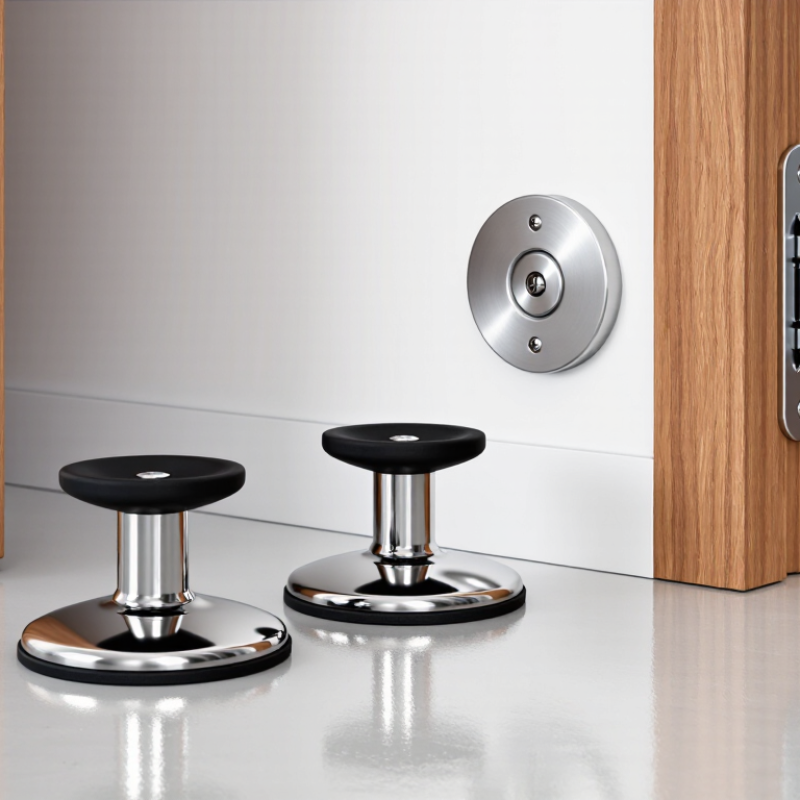
A door stopper limits door swing, protects nearby walls, and reduces handle impact. Small part. Big job. The right design depends on door weight, floor finish, and traffic. A rubber wedge grips beneath a door and needs no installation. Magnetic floor or wall stops hold a door open, while fixed stops cushion impact at a set point. Hinge-pin styles fit some hinged doors, but may transfer force to the hinge. Grand View Research’s 2024 Door Hardware Market report estimated the wider global door hardware market at about US$17.7 billion in 2023. This includes many products, not door stoppers alone.
Material and placement matter in daily use. Rubber and silicone tips soften contact; metal bodies offer a firmer structure, often with a replaceable buffer. On polished tile, a loose wedge may slide. On carpet, it may hold less securely than expected. Floor-mounted stops can be sturdy, but their position needs careful checking before installation. Wall-mounted types keep floors clear, yet must meet the door at the right height. A common oversight is choosing by appearance alone. Measure the gap, consider the door’s swing, and check whether the stop will obstruct cleaning or foot traffic. Small details can disappoint.
China’s door stopper industry benefits from a broad manufacturing base, with suppliers serving both high-volume orders and smaller custom runs. The National Bureau of Statistics of China reported that manufacturing value added grew 5.0% in 2023. That figure describes manufacturing overall, not door stopper production specifically. Still, it helps explain the depth of local capabilities in metal forming, machining, surface finishing, and component assembly. A small part still matters. A stopper’s performance can depend on details such as rubber hardness, spring tension, screw alignment, and the finish beneath its contact point.
Automation is expanding across China’s factories. The International Federation of Robotics reported 276,288 industrial robot installations in China in 2023, equal to 51% of global installations that year. This covers all industries, not door stopper plants alone. That distinction matters. Buyers can assess a supplier’s actual capability by checking production samples, material records, dimensional inspection, and repeated-cycle test results. Ask how the product behaves on different floor surfaces, too. A polished sample proves little if the rubber tip slips after repeated use. I would not assume every factory has the same testing discipline; that gap deserves attention.
| Product Type | Common Materials | Typical Manufacturing Processes | Common Installation | Relevant Quality Checks |
|---|---|---|---|---|
| Floor-mounted door stopper | Stainless steel, zinc alloy, brass, or rubber components | Metal stamping or machining; die casting for suitable alloy parts; polishing and surface finishing; rubber molding for contact tips | Fixed to the floor with screws or other specified fasteners | Dimensions, mounting-hole alignment, finish consistency, attachment security, and contact-tip fit |
| Wall-mounted door stopper | Stainless steel, zinc alloy, aluminum, or an elastomer bumper | Stamping, machining, or die casting depending on design; deburring; plating, brushing, or coating; bumper molding | Attached to a wall using screws; positioning depends on the door and surrounding surface | Mounting stability, bumper retention, dimensional accuracy, and surface-finish inspection |
| Magnetic door stopper | Metal housing, permanent magnet, and polymer or rubber contact parts | Housing forming or machining; magnet assembly; molding of protective components; final assembly and functional inspection | Usually installed on the floor or wall, with the matching component fitted to the door | Magnetic engagement, alignment, release operation, fastener fit, and component security |
| Hinge-pin door stopper | Steel or stainless-steel pin and metal or polymer stop components | Wire forming, turning, stamping, or machining; assembly; finish application where required | Installed at a compatible door hinge by replacing or using the hinge pin, according to the design | Pin dimensions, fit with compatible hinges, adjustment function, and component retention |
| Rubber wedge door stopper | Rubber or thermoplastic elastomer; some designs include a rigid insert | Compression or injection molding; trimming and visual inspection; insert assembly where applicable | Placed on the floor beneath the door edge; no permanent fixing is typically required | Shape and weight consistency, molding defects, surface grip, and fit beneath the intended door |
| Quality and production capability | Material selection varies by product design, application, and finish requirements | Common capabilities include metal forming, machining, casting, elastomer molding, surface finishing, assembly, and packaging | Products can be designed for floor, wall, hinge, or portable installation | Typical checks include incoming-material verification, in-process dimensional inspection, finish review, assembly checks, and sample functional testing |
Note: This table describes common door-stopper product types and manufacturing processes. Actual materials, designs, inspection plans, and production capabilities vary by product specification and manufacturer.
A dependable door stopper begins with materials suited to its location and daily use. Stainless steel resists moisture, while zinc alloy supports detailed shapes and a solid feel. Rubber or silicone contact pads help grip flooring and reduce scuffs. The right combination depends on floor type, door weight, and expected traffic. Small details matter.
Production usually includes cutting or casting, machining, deburring, surface finishing, and assembly. Each step can affect fit and durability. A rough edge may scratch a floor; a poorly bonded pad may loosen over time. Suppliers should explain their process and how they control these risks. Finishes should be checked for even coverage, and moving parts should operate smoothly.
Quality standards need practical checks, not just polished paperwork. Manufacturers can verify dimensions, inspect surface defects, and test pad adhesion and holding performance against agreed requirements. Corrosion testing may also suit products intended for damp areas. Ask for inspection records and samples from the actual production process. No checklist catches everything, and wear varies across floors. A careful supplier will discuss limitations honestly and adjust specifications when testing reveals a weak point.
China Best Door Stopper Manufacturer and Supplier
How to Evaluate Chinese Door Stopper Manufacturers and Suppliers
A reliable evaluation starts with the product, not a polished catalog. Ask for drawings that specify base diameter, overall height, fixing-hole spacing, material grade, and finish thickness. Then request samples made through the same process as bulk orders. Check whether each stopper stays firm on tile and timber, and whether its rubber tip marks either surface. Small details matter. Check it physically.
Assess repeatability using written test records. Ask how the factory checks impact resistance, mounting pull-out, corrosion, and repeated contact. Request test methods, sample sizes, and dated results. A generic certificate is not proof. The World Bank’s 2023 Logistics Performance Index gave China an overall score of 3.7 out of 5. This offers useful context, but measures logistics, not factory workmanship. Keep those questions separate.
Review the supplier’s quality plan, defect-handling process, packaging, and production lead-time records. Compare quoted tolerances with inspected samples, and approve a reference sample before ordering. Verify carton labels and spare fixing parts against your requirements. Video calls can help, but cannot replace independent inspection. There is an awkward trade-off: a very low price may reflect lean packaging, thinner metal, or a missed specification. Ask which, and record the answer.
Applications, Customization Options, and Purchasing Considerations
Door stoppers serve homes, hotels, offices, clinics, and busy corridors. A floor-mounted model can hold a heavy door open, while a wall-mounted bumper protects paint and plaster. In wet or dusty areas, buyers should check corrosion resistance and cleaning access. Fit matters more. Measure door clearance, swing direction, mounting surface, and expected impact before selecting a type.
Customization usually covers material, finish, dimensions, mounting method, and packaging. Stainless steel suits frequent contact; rubber tips can reduce noise and surface marking. For bulk orders from a China-based supplier, request drawings, material specifications, samples, and carton details. Ask for installation instructions too. Small mismatches can delay site work. Test before ordering. A sample mounted on the actual wall or floor can reveal issues that product photos miss.
Purchasing decisions should weigh service life, not unit price alone. The U.S. Census Bureau reported $1.98 trillion in U.S. construction spending for 2023, up 7% from 2022. This signals broad building activity, not door-stopper demand specifically. Houzz’s 2024 U.S. Houzz & Home Study reported a $24,000 median renovation spend for 2023. These figures point to varied project budgets, so suppliers should provide clear specification options. One caveat: figures vary by region, and no report replaces a site survey. Check load requirements, replacement availability, quality-control records, and lead time before confirming an order.