Cabinet doors look simple, but their joinery demands accuracy. Cabinet Door Router Bits shape the rails, stiles, panels, and edge profiles that define a door’s strength and appearance. A small mistake can leave a visible gap, torn grain, or an uneven shadow line. The problem often appears after finishing. That makes correction expensive.
Industry reports show why this subject matters. The 2024 U.S. Houzz Kitchen Trends Study reports that many homeowners continue investing in substantial kitchen upgrades, including replacement cabinetry. The Freedonia Group also identifies remodeling activity as an important demand driver for cabinets and related woodworking products. These reports do not measure router-bit sales directly. However, they reveal a practical trend: better-looking cabinet work is expected, even when production time remains limited.
Woodworking educator Marc Spagnuolo has described the router as “one of the most versatile tools in the shop.” That versatility depends on the bit, material, feed direction, and machine setup. A matched rail-and-stile set can produce clean joints, but it cannot fix incorrect bearing alignment or excessive feed pressure. Slow passes matter. Sharp cutters matter more.
This guide examines how Cabinet Door Router Bits work, where each profile fits, and how experienced woodworkers choose between carbide-tipped and solid-carbide designs. It will also question a common assumption: the most expensive bit is not always the best choice. Grain direction, stock thickness, router speed, and dust extraction can change the result. Some recommendations remain workshop-dependent. That uncertainty deserves attention.
What Is a Cabinet Door Router Bit?
Definition and Purpose of a Cabinet Door Router Bit
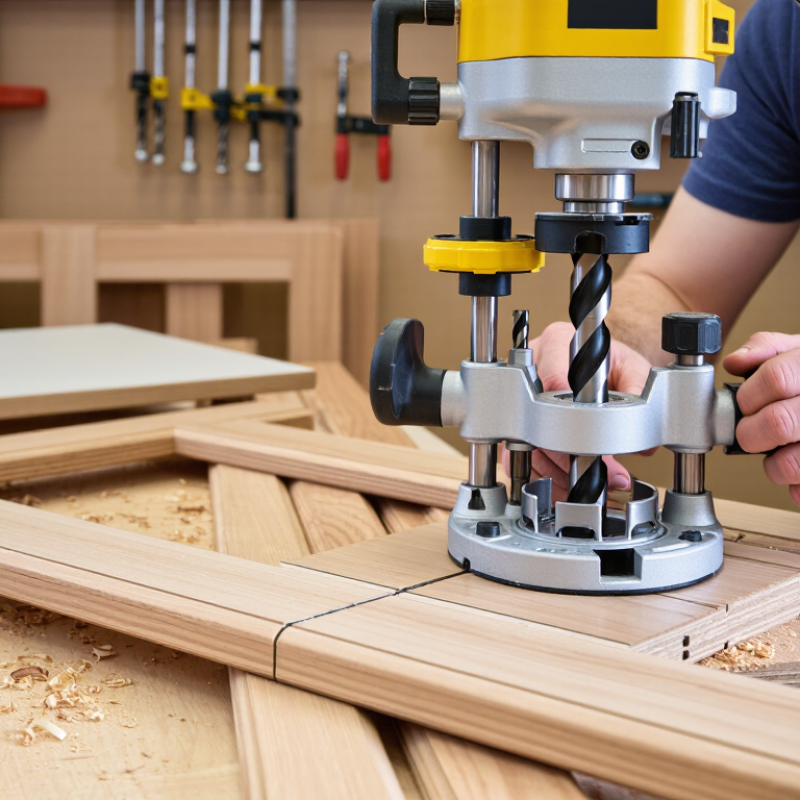
A cabinet door router bit is a cutting tool designed for shaping solid-wood door parts. It fits into a router and removes wood along a controlled cutting path. Common profiles include rail-and-stile, raised-panel, and edge-forming designs. Each profile creates a specific joint or decorative contour.
Its main purpose is to build accurate cabinet doors with clean, matching edges. A rail-and-stile bit cuts the joining profiles for horizontal and vertical frame pieces. A raised-panel bit shapes the center panel’s sloped or decorative edge. These profiles help the door fit together without relying on visible fasteners.
In practical use, the bit must match the wood thickness and the intended door design. Check the cutting depth with scrap material before touching the actual workpiece. Small differences can leave a step between the frame and panel. That mistake is frustrating.
Sharp cutters, a stable router table, and steady feed pressure improve the result. I have found that rushing the final pass often causes torn grain, especially near end grain. A slower feed may feel safer, but excessive hesitation can also burn the wood. The correct setting depends on timber hardness, bit size, and router speed. Always secure the workpiece and use suitable eye and hearing protection. A test door component is not wasted material; it reveals fit, grain behavior, and adjustments before the finished cabinet is at risk.
| Data Dimension | Description | Typical Details | Primary Purpose |
|---|---|---|---|
| Definition | A cabinet door router bit is a cutting tool used with a router to shape the edges, profiles, or center panels of cabinet doors. | Usually made from carbide-tipped or solid-carbide cutting material. | To produce accurately shaped door components and decorative or functional joinery. |
| Common Bit Category | Raised-panel bits create a shaped panel that fits into the frame of a traditional cabinet door. | Often used with a matching rail-and-stile profile. | Forms the raised center panel and its decorative transition. |
| Common Bit Category | Rail-and-stile bits shape the inside edges of the horizontal rails and vertical stiles that form a framed door. | Designed as a matched profile set or used with a cope-and-stick configuration. | Creates the door frame profile and the joint that holds the frame together. |
| Common Bit Category | Shaker-style or tongue-and-groove bits form a simpler flat-panel door joint. | Typically used for square, clean-lined frames with a flat center panel. | Cuts a tongue and groove or similar joint for assembling the door frame. |
| Edge-Profile Bit | Edge-profile bits shape the outside perimeter of a cabinet door or add a decorative detail. | Examples include round-over, chamfer, ogee, and bevel profiles. | Softens, angles, or decorates exposed door edges. |
| Panel-Raising Feature | A panel-raising cutter removes material from the panel edges to create a raised or fitted center panel. | Some designs include a back-cutter to improve the fit inside the frame groove. | Produces the shoulder, bevel, or decorative profile around the panel. |
| Typical Shank Diameter | The shank is the section held by the router collet. | Common sizes include 1/4 inch and 1/2 inch, depending on the router and bit design. | Provides compatibility with the router and transfers cutting force securely. |
| Suitable Router Type | The router must provide sufficient power, speed control, and collet capacity for the selected bit. | Large panel-raising bits are commonly used in a router table for improved support and control. | Ensures stable cutting and reduces the risk of binding or loss of control. |
| Compatible Materials | Cabinet door router bits can cut many common woodworking materials when the bit and feed rate are appropriate. | Hardwood, softwood, plywood, and medium-density fiberboard may be suitable depending on the profile and cutter. | Creates consistent profiles in solid or engineered wood components. |
| Key Setup Requirement | The bit height, fence position, workpiece support, and cutting direction must be set correctly before routing. | Test cuts on scrap material are recommended before working on final door parts. | Helps achieve a precise fit and prevents unnecessary material waste. |
| Cutting Approach | Deep cuts should generally be made through several shallow passes rather than one heavy pass. | The correct feed direction is normally against the rotation of the bit when using a handheld router. | Improves control, reduces tear-out, and lowers stress on the router and cutter. |
| Main Advantages | A suitable bit can create repeatable profiles and professional-looking joinery. | Useful for custom cabinet doors, replacement doors, and small woodworking projects. | Improves accuracy, appearance, and consistency during cabinet door production. |
| Safety Considerations | The bit must be fully seated in the collet, and the workpiece must be firmly supported. | Use eye and hearing protection, keep hands away from the cutter, and follow the bit's rated speed. | Reduces the risk of kickback, accidental contact, flying debris, and tool damage. |