China Best AI Powered Glasses Suppliers for Global Buyers

China is an important sourcing destination for connected eyewear, but choosing a supplier takes more than comparing prices. Global buyers need to examine product design, production capacity, software support, and communication—not just the sample on the table. The right Ai-Powered Glasses should feel balanced on the face, deliver clear audio in a busy café, and make everyday tasks easier without adding needless complexity.

“Glasses are the ideal form factor for AI,” Meta CEO Mark Zuckerberg has said. That idea captures the appeal, but it does not guarantee a good product. Buyers should ask how voice features work, what the glasses can do offline, how updates are handled, and how user data is managed. They should also confirm specifications, quality-control procedures, warranty terms, and relevant market requirements directly with each supplier. Details matter.

This guide introduces Chinese suppliers and the practical questions global buyers can use to assess them. Look closely. A polished prototype may conceal inconsistent production, and a persuasive product page cannot replace a sample test. Check lens options, frame comfort, battery performance, app compatibility, and after-sales response before committing. Supplier claims deserve verification, even when the first conversation feels reassuring. The comparisons ahead are a starting point, not a final verdict; real needs differ by market, use case, and budget.
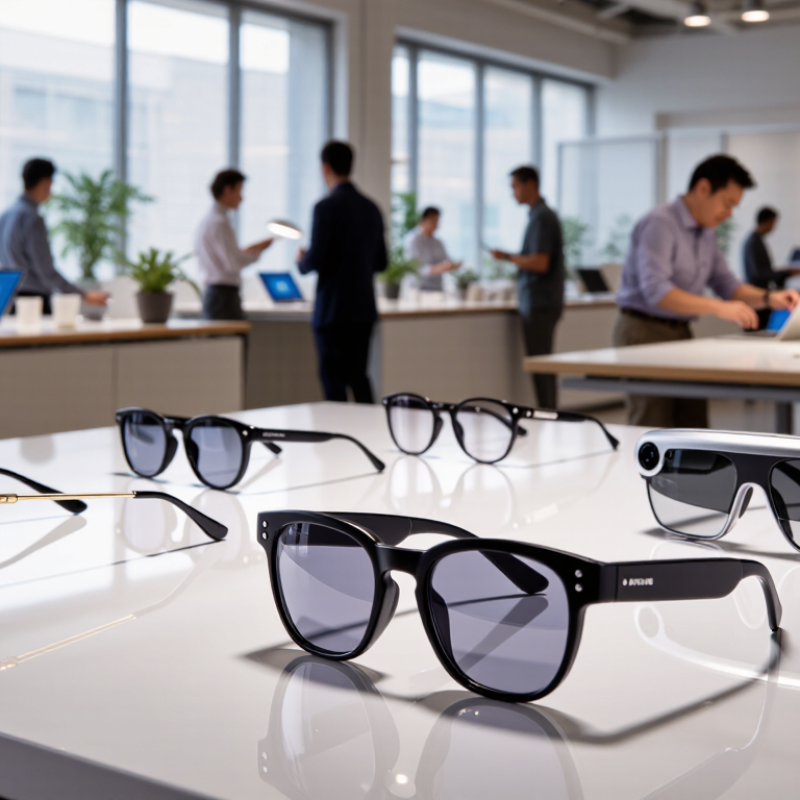
China Best AI Powered Glasses Suppliers for Global Buyers

What AI-Powered Glasses Are and How They Work

AI-powered glasses are wearable computers built into ordinary-looking frames. A camera captures a scene, microphones pick up speech, and small processors interpret inputs. Some tasks run on the glasses; others rely on a paired phone or cloud service. Computer vision can identify objects or read signs, while a language model turns spoken questions into answers. Audio then reaches the wearer through tiny speakers. The loop feels simple. The engineering is not. Processing, wireless connection, and bright displays all compete for limited battery capacity.

The market is growing, but shipment growth does not prove that every feature works reliably. Counterpoint Research reported that global smart-glasses shipments rose 210% year over year in the first half of 2024, with AI-enabled models driving much of the increase. Grand View Research valued the broader smart-glasses market at about USD 1.93 billion in 2023 and projected a 27.3% compound annual growth rate from 2024 to 2030. These figures describe different market scopes, so they should not be treated as directly comparable. In practical use, recognition may falter in dim rooms, noisy streets, or unfamiliar languages. Buyers should examine microphone quality, battery life, processing location, and clear camera-status signals—not just advertised AI features. Some answers still need a second check.

Key Features and Product Types Offered by Chinese Suppliers

Chinese suppliers offer several types of AI-powered glasses, each suited to different daily tasks. Audio models pair open-ear speakers with microphones for calls, voice commands, and spoken translation. Camera-equipped versions can capture photos or short video clips. Display glasses add a small visual layer for navigation or notifications, while more advanced designs may support hands-free assistance. Keep the use case clear. More features can mean greater weight and shorter battery life.

Common features include Bluetooth connectivity, touch or voice controls, noise-reducing microphones, and companion apps. Some models support real-time transcription or translation, though performance can vary with accent, background noise, and network quality. Lens options may include prescription-compatible frames, tinted lenses, or interchangeable styles. Ask suppliers for measured battery life, frame weight, charging time, and supported phone systems. Numbers matter.

For a practical comparison, request sample units and test them during calls, walking, and outdoor use. Check whether controls are easy to find without looking, and whether the speakers remain clear in a busy street. Suppliers may offer frame colors, packaging, or software adjustments for bulk orders, but customization can affect cost and delivery time. A specification sheet cannot reveal comfort after several hours. Even hands-on testing has limits, so record feedback from different users before placing a large order.

Overview of China’s AI-Powered Glasses Supplier Landscape

China’s AI-powered glasses suppliers span optical factories, frame makers, electronics assemblers, and software teams. Many can combine lightweight frames, microphones, cameras, speakers, and wireless modules under one roof. Others rely on specialist partners. This matters: a polished sample does not prove stable mass production. Grand View Research valued the global smart-glasses market at USD 1.93 billion in 2023 and forecast a 27.3% compound annual growth rate from 2024 to 2030. The category includes products beyond AI glasses, so buyers should treat this figure as market context, not a direct sales forecast.

Counterpoint Research reported that global smart-glasses shipments rose 210% year over year in the first half of 2025, reflecting stronger demand for AI-enabled devices. For global buyers, China’s supplier base offers options for prototyping, component sourcing, and production scaling. Ask for evidence on frame weight, battery life, microphone clarity, heat during continuous use, and performance in noisy streets. Request test records from production units, not only hand-finished samples. Check who maintains the voice-assistant software and how updates are handled. Important details. Supplier capabilities vary, and product claims can outpace real-world performance. Even experienced buyers may need to revise specifications after wear tests; that is inconvenient, but useful.

How Global Buyers Can Evaluate and Compare Suppliers

Global buyers evaluating AI-powered glasses suppliers in China should compare documented performance, not polished demonstrations alone. Request a working sample and test it in ordinary settings: a busy street, a quiet office, and a full day of use. Check voice pickup, audio clarity, camera response, battery life, and comfort after several hours. Ask how results were measured. A single impressive demo proves little.

Tips: Use the same test checklist for every supplier. Ask for written specifications, sample lead times, warranty terms, and software update procedures. Small details matter. Confirm which features are ready for production and which remain under development.

Review the supplier’s quality-control process and request recent inspection records where available. Clarify how defects are handled, who provides technical support, and whether spare parts can be supplied consistently. Compare total costs, including customization, packaging, shipping, and after-sales service. A low unit price may not mean lower overall cost. Also, a comparison table can hide real differences: supplier claims may use different test conditions. Verify important figures independently, and record what you could not confirm. No supplier will lead in every category. The right choice depends on your target users, order volume, and tolerance for product revisions.

Sourcing, Compliance, and Logistics for International Orders

When sourcing AI-powered glasses from China, evaluate suppliers beyond product photographs. Request a live sample and test voice pickup in a busy room, outdoor glare, and a weak network. Check frame fit, lens options, charging time, and whether the companion app supports your target languages. Small details matter. A polished sample does not guarantee consistent production, so ask how the factory checks each batch and handles defects.

Confirm the technical file before placing a large order. It should clearly identify wireless functions, battery specifications, materials, and applicable test reports. Requirements differ by destination and product configuration; have a qualified local compliance specialist review the documents before shipment. Ask the supplier to confirm labeling, manuals, and packaging languages in writing. I would not rely on a certificate image alone. Match its model details to the exact glasses being ordered.

For international logistics, agree on carton dimensions, gross weight, lead time, and delivery terms before paying the balance. Lithium batteries may require specific transport paperwork, depending on the shipping route and carrier. Share documents with your freight forwarder early. A few days of delay can become costly. Consider a small trial shipment, then compare arrival condition, customs paperwork, and actual delivery timing against the supplier’s promises. This step takes extra effort, and it may reveal gaps nobody mentioned during the sales call.